
Last updated November 15, 2026
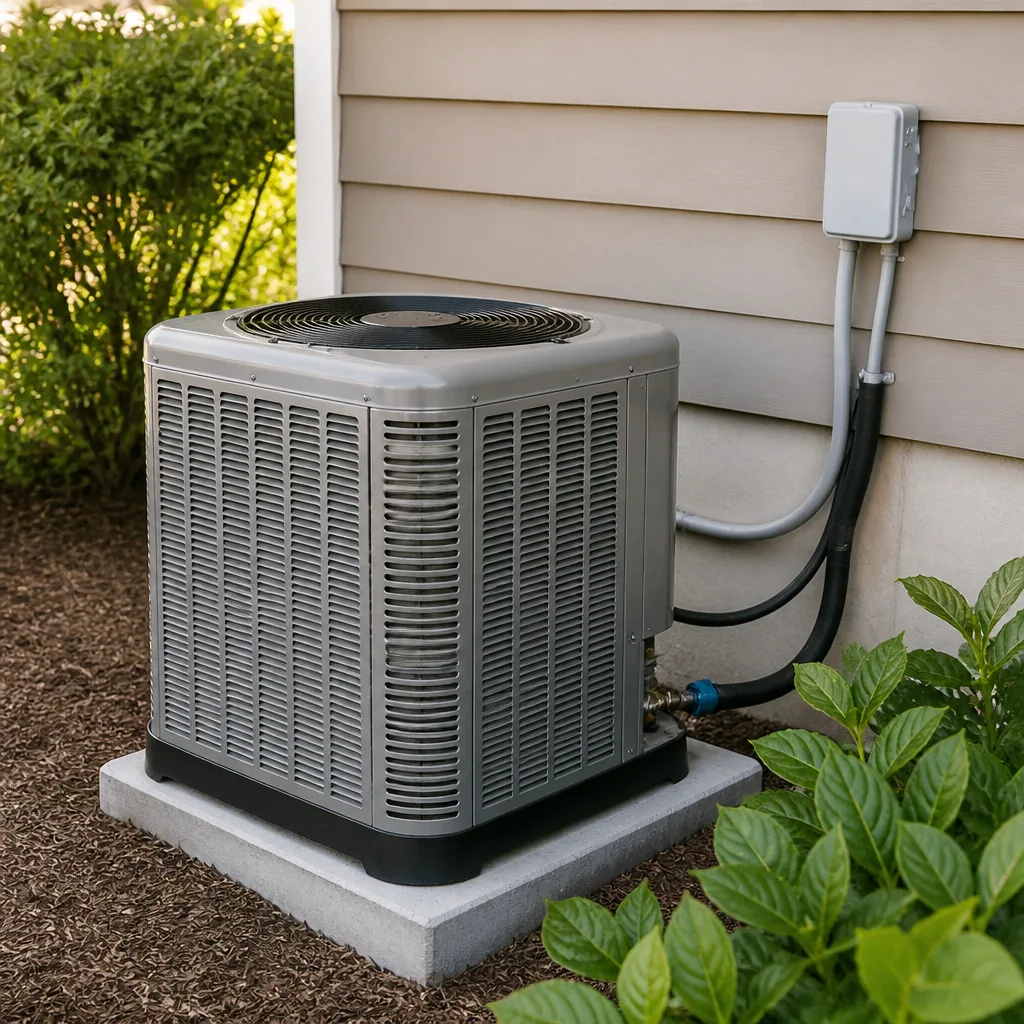 AC repair
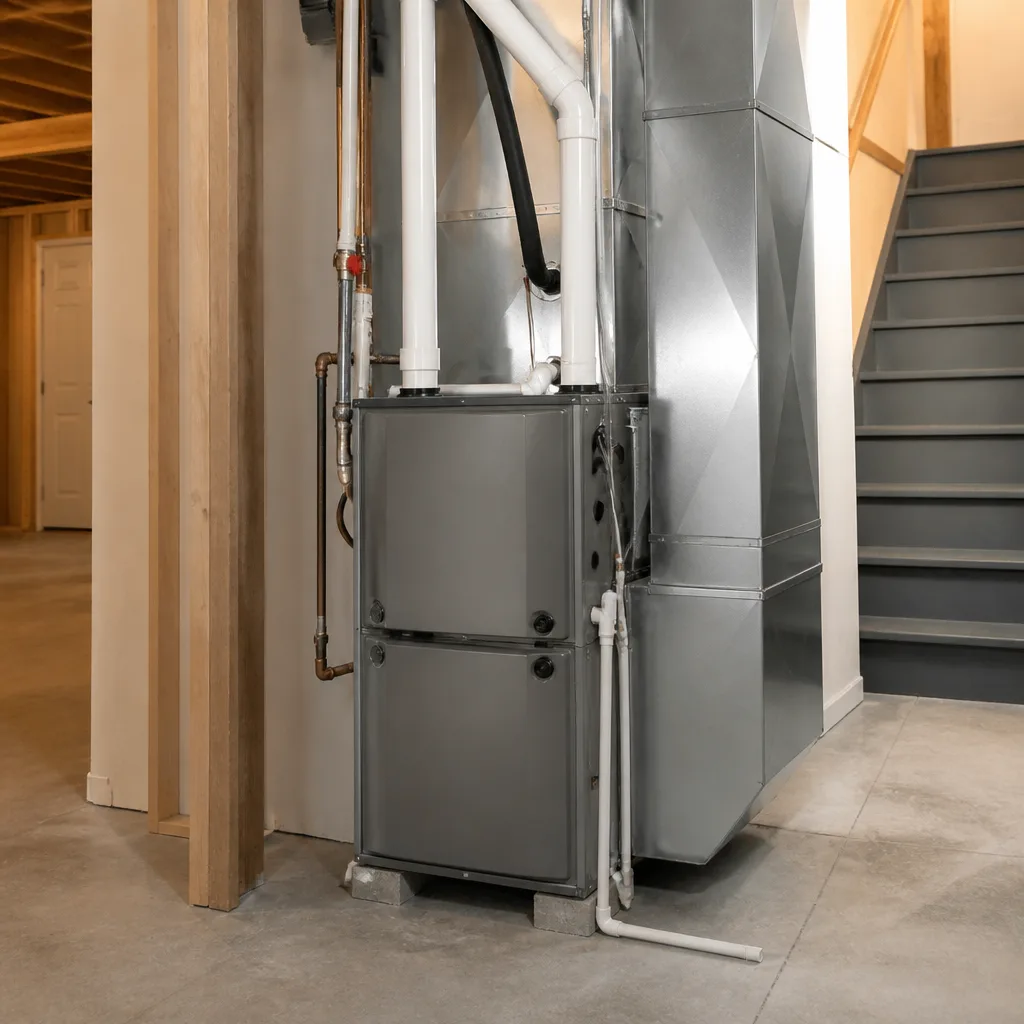 Furnace & heating
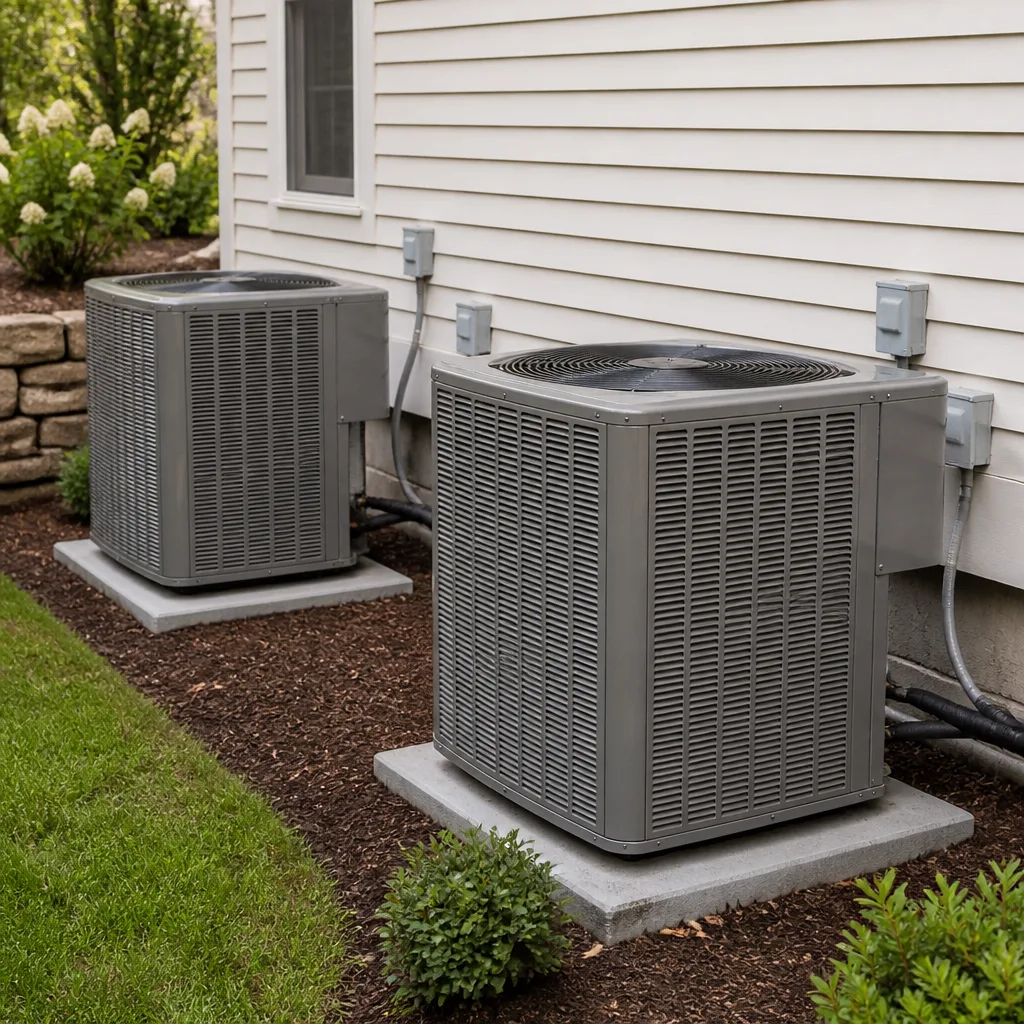 Heat pumps
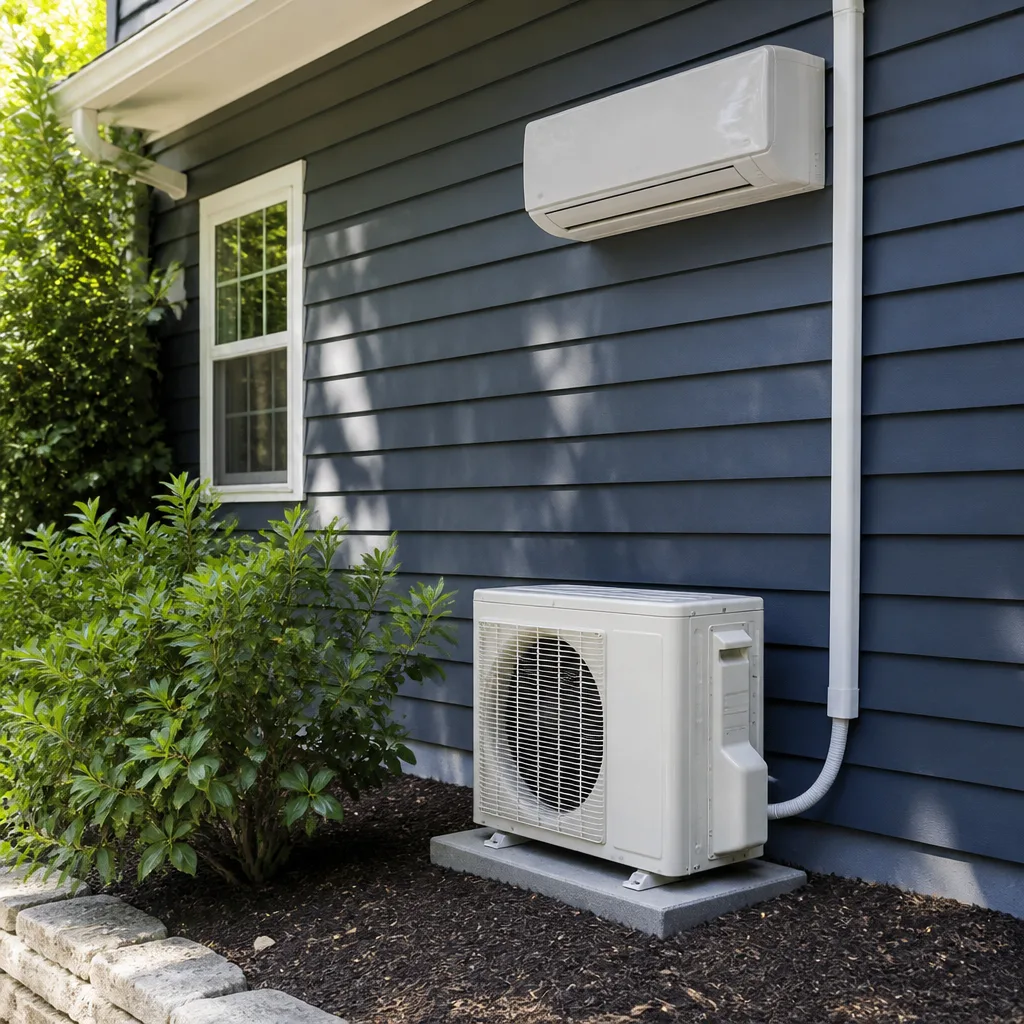 Ductless mini splits
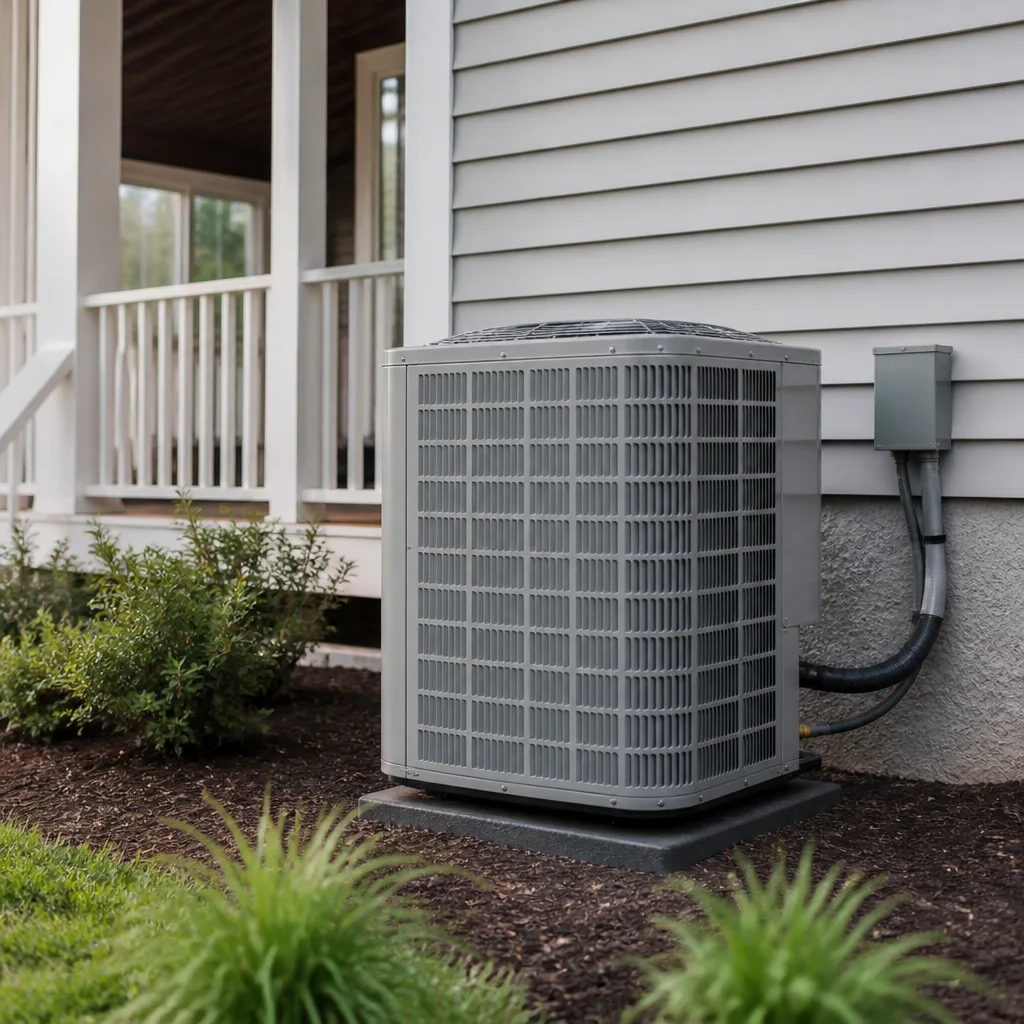 Carrier
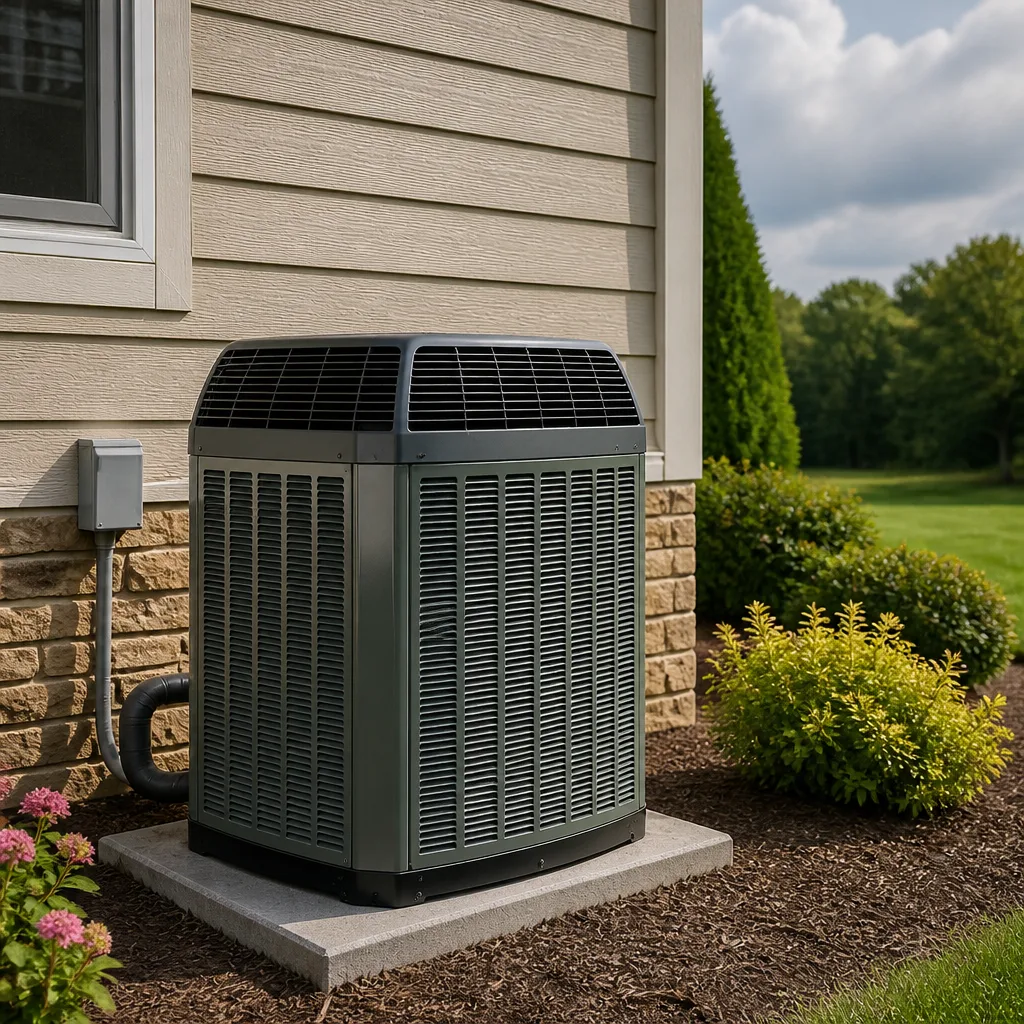 Trane
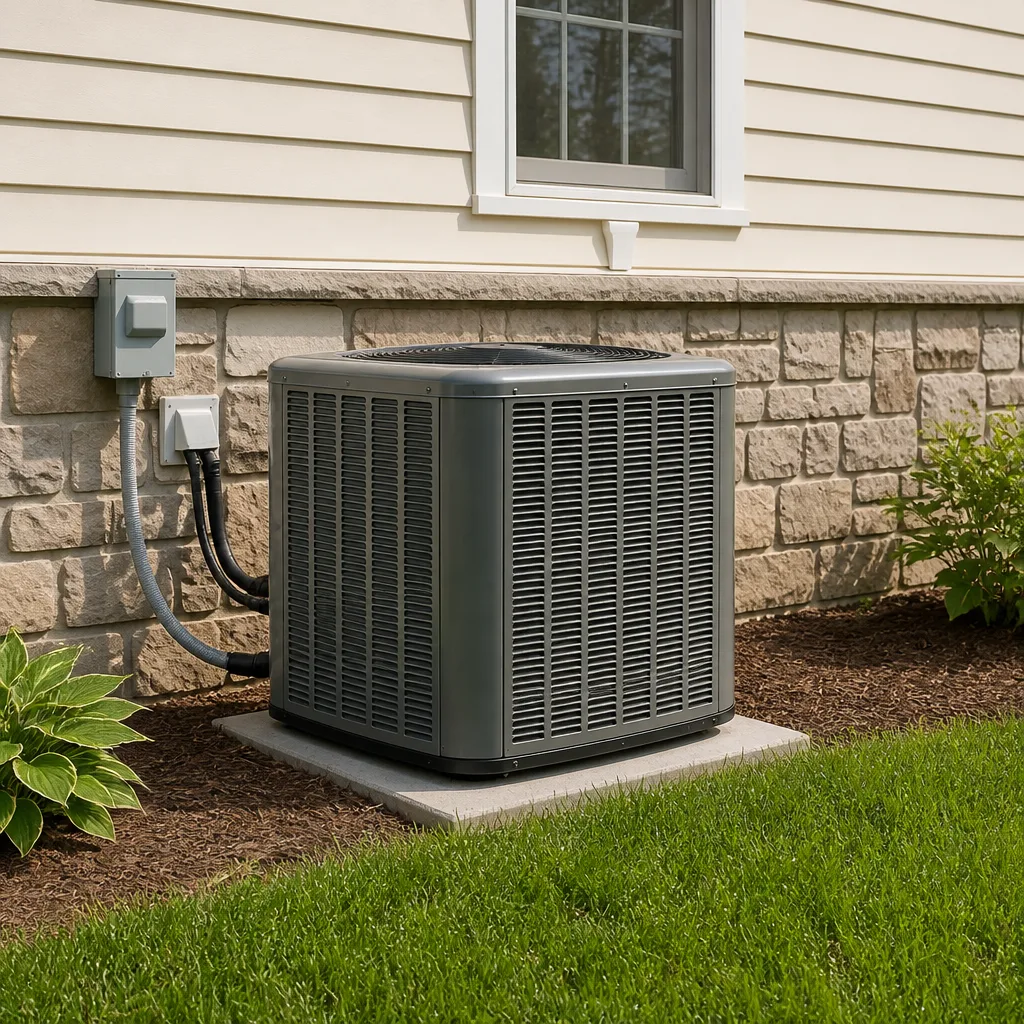 Goodman
Seasonal tune-up and full diagnostic on your Carrier, Trane, or Goodman system - readings shown to you before any repair is proposed
Diagnosis first, numbers second - you approve the repair price before a single part goes in.
Get your free estimateHVAC Emergency Preparedness Guide for League City Homes
Most homeowners in League City prepare for HVAC emergencies with a phone call and hope. That’s a mistake, and it’s the wrong one. Our summers make a cooling failure a medical event, and our storm season makes an outage a multi-step recovery problem. The two need completely different responses, and neither starts with a panicked call to a contractor. This guide walks you through how fast a League City home heats up without AC, how to shut down and protect an outdoor unit before a storm, how to restart a system safely after power returns, what to document before anything fails, and where to find cooling help in Galveston County while you wait for a technician.
Quick Answer
An HVAC emergency in League City falls into one of two buckets: a cooling failure in high heat, which is a health risk within hours and needs fast dispatch, or a storm-related outage that needs a careful restart sequence rather than a rush. For the first, call (866) 412-4707. We answer 24/7. Fast dispatch, 7am-7pm, Sunday through Friday. For the second, know your shutdown and restart steps before the storm arrives.
Styles & brands we work with
- AC repair
- Furnace & heating
- Heat pumps
- Ductless mini splits
- Carrier
- Trane
- Goodman
Table of Contents
- How Fast Does a League City Home Heat Up Without AC?
- Pre-Storm Shutdown and Protection for Your Outdoor HVAC Unit
- How to Restart Your HVAC System Safely After a Power Outage
- What to Document Before an Emergency (and Where to Keep It)
- Cooling Centers and Heat Emergency Resources in League City
- Emergency Repair or Replace? How to Decide Under Pressure
- Setting Up a Safe Room for Extended AC Outages
- Maintenance That Prevents Most Summer Emergencies
How Fast Does a League City Home Heat Up Without AC?
An AC failure in a League City home becomes health-critical faster than most people expect. No structure cools itself in the middle of a clear Texas summer day, and the interior temperature can rise quickly enough that a healthy adult feels the effects within four hours after an AC failure. Older residents and anyone with heart or respiratory conditions are at risk sooner.
The real question is your decision window, and it depends on outdoor temperature, sun exposure, and how well your home holds cool air. Here’s roughly how that plays out:
- Outdoor high around 100°F: Interior temperature can exceed 95°F within about four hours. This is the medically urgent zone. Elderly residents, infants, and anyone with health conditions need to leave for cooler space early rather than wait it out.
- Outdoor high in the mid-90s: You have a longer but still tight window – several hours before the interior becomes uncomfortable for a healthy adult, less for the vulnerable. Call right away; don’t wait to assess.
- Outdoor high in the high 80s: You have most of a day before the heat becomes serious. Use that time to open interior doors, run fans, use window coverings against afternoon sun, and arrange service.
- Overnight failures: An overnight failure in mild weather is an inconvenience. An overnight failure in a hot stretch is less so, but the risk climbs fast once the sun comes up. Call first thing.
Homes shaded by mature trees or built with fuller sun exposure on the west face behave differently. A west-facing home without afternoon shade can heat faster than the general numbers suggest. During any kind of power outage or extended cooling failure, plan for your AC to need help well before you think it does, and treat any elderly neighbor or household member with health concerns as needing to move first.
If your system is blowing warm air or has quit entirely, don’t wait for the house to get hot before acting. Call (866) 412-4707. We answer 24/7. Fast dispatch, 7am-7pm, Sunday through Friday. A call placed outside dispatch hours is booked into the next opening.
Pre-Storm Shutdown and Protection for Your Outdoor HVAC Unit
About half of what people do to prepare an outdoor unit for a storm is useful, and half is a myth. Here’s the sequence that actually protects your equipment, and a few things to skip.
Steps that matter (in order)
- Turn the system off at the thermostat first. Set it to OFF, not just to a high temperature. This prevents the compressor from trying to start during power flickers.
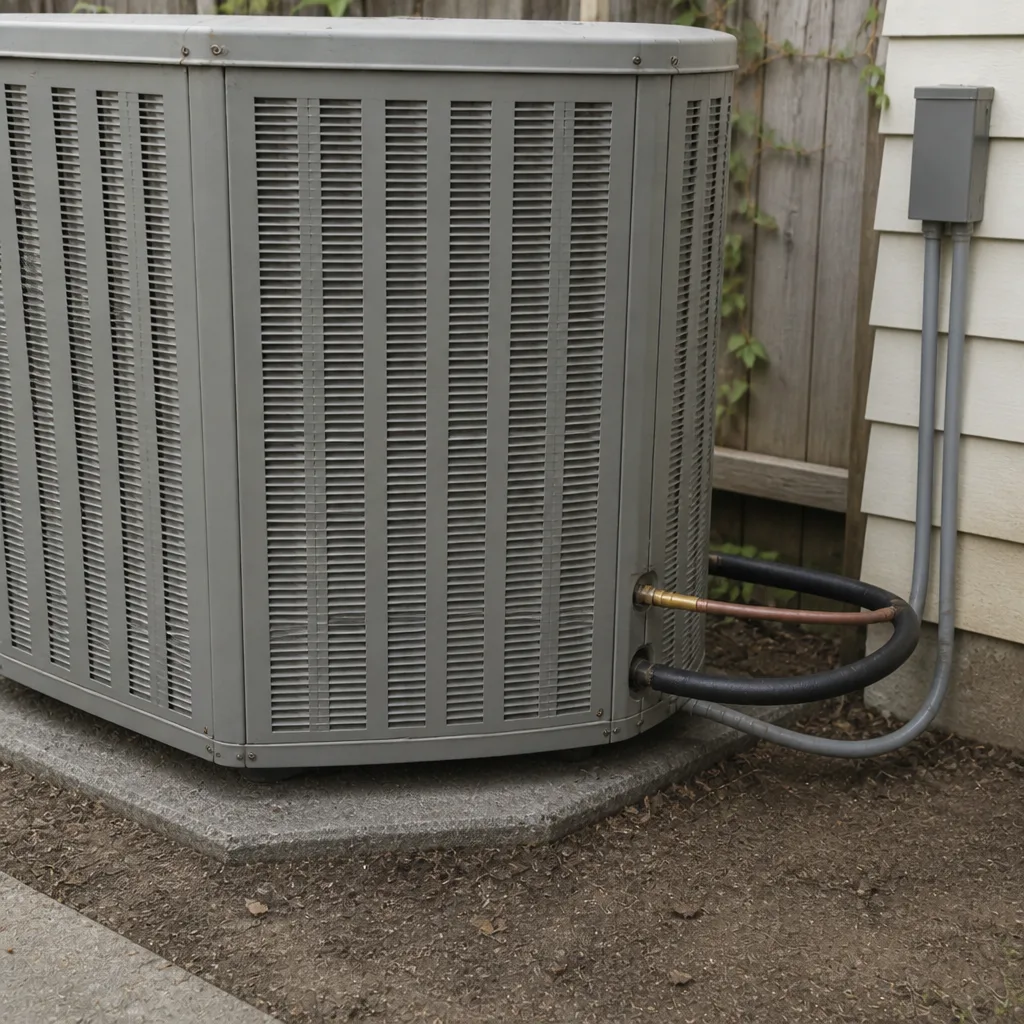
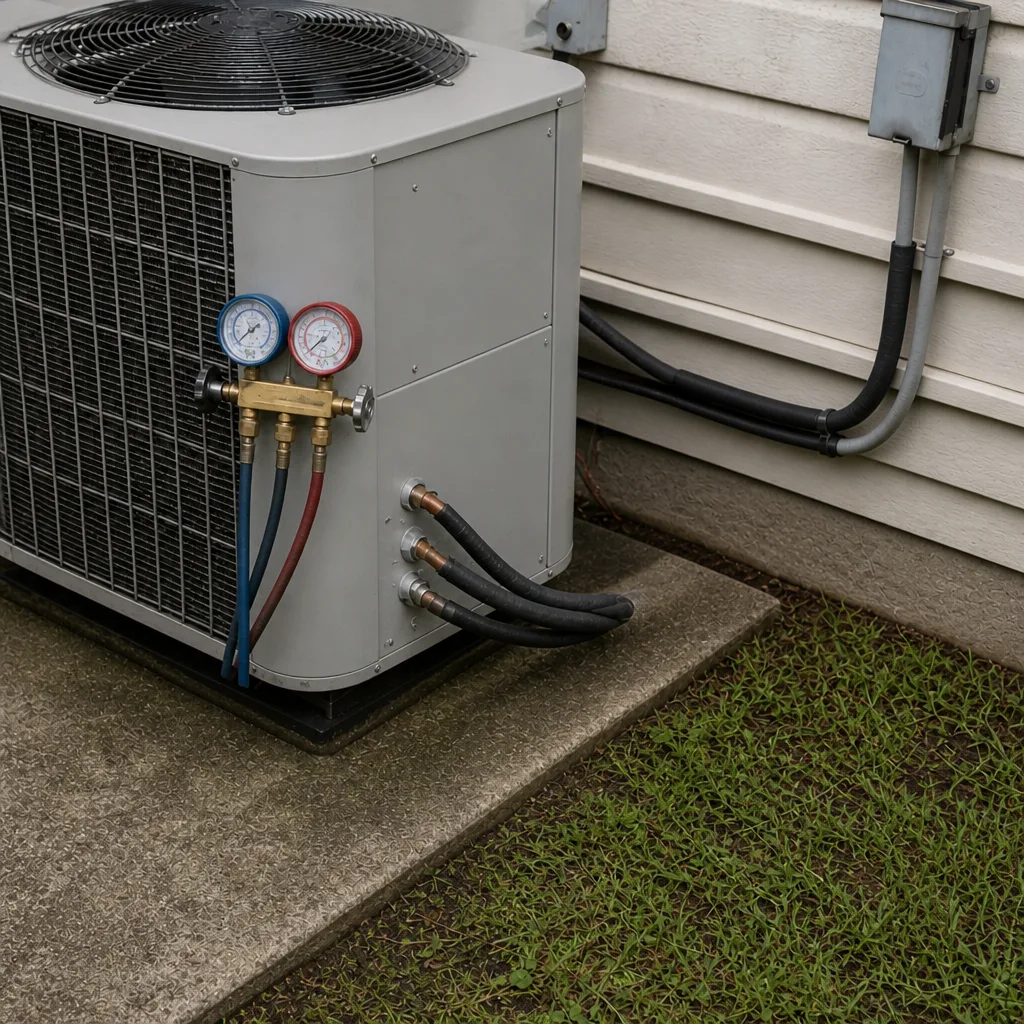
- Cut power at the disconnect. The outdoor unit has a breaker or a pull-out disconnect near the condenser. Pull it or switch it off. This protects the compressor from surges when power returns.
- Remove loose objects within 10 feet of the unit. Lawn chairs, grill covers, trash cans, garden hoses, potted plants. A single flying object can bend the condenser fan or damage refrigerant lines.
- Clear the immediate perimeter. Make sure nothing is leaning against the unit and nothing is stored on top of it.
- Photograph the unit as it sits. A few phone photos of the cabinet, the line set, and the disconnect before the storm help with any insurance claim afterward.
Steps that don’t help and can backfire
- Don’t wrap the unit in plastic or tarps. Condensers need to breathe. Trapping moisture in a covered unit during a storm pushes water into the electrical components, which is worse than rain getting in through the normal shell.
- Don’t unbolt or remove the unit. The refrigerant lines are sealed and pre-charged. Disconnecting a condenser is a licensed-technician job and an unnecessary risk.
- Don’t stack sandbags directly against the cabinet. Enough air must move through the coil and fan to prevent pressure damage during high wind.
- Don’t tape the fan grille or covers shut. These are meant to move with the unit and will be damaged less than by an adhesive that pulls at the finish and traps moisture.
During storm season, League City’s afternoon thunderstorms and tropical systems can bring the kind of wind that moves objects well beyond your yard. If you’re unsure whether your particular setup has a disconnect or a breaker-only setup, look for a small metal or plastic box on the wall near the unit. If there isn’t one, your disconnect is likely inside at the panel.
If your system didn’t hold up through a storm or is showing signs of trouble after one, furnace repair technicians also work on cooling equipment, so we can inspect, diagnose, and get you back on track. We work on whatever system you have – Carrier, Trane, Bryant, American Standard, or any of the other brands we service.
How to Restart Your HVAC System Safely After a Power Outage
The single biggest mistake after a storm is restarting the HVAC system too fast. Many manufacturers build a time delay into the compressor controls that locks the system out for a set period after power is restored. This is by design. It protects the compressor from restarting under pressure, which shortens its life or kills it outright.
The safe restart sequence
- Confirm power is stable. Not just “the lights came back on” but stable for several minutes. Power flickers during restoration are common, and every flicker restarts the clock.
- Check the thermostat is still set to OFF. Do not turn it on yet.
- Reinstall the outdoor disconnect or switch the breaker on. Leave the thermostat OFF.
- Wait at least 5 to 10 minutes. This gives the compressor’s internal lockout time to clear. Some units need longer; know your model and matching instructions.
- Turn the thermostat to COOL and set a reasonable temperature. Don’t crank it low to force the system to work harder. Set it to a normal setting and let it run.
- Listen and watch. The outdoor unit should start smoothly, the fan should spin freely, and cool air should come from the vents within a few minutes. Grinding, humming without starting, or a tripped breaker means stop and call a professional.
Warning signs to stop and call
- The breaker trips again as soon as you turn the system on.
- The outdoor fan spins but the air out of the vents is warm.
- You hear a hard mechanical noise from the compressor.
- Ice forms on the refrigerant lines within minutes of restart.
One point on safety: the electrical connections at the condenser and the compressor itself carry enough current to hurt a person badly. We recommend anyone with any doubt leave the box closed and call for a diagnosis. The same holds if you have any reason to think water entered the unit – moisture plus electricity is not a combination to troubleshoot as a homeowner.
When a restart doesn’t go the way it should, call (866) 412-4707 for a diagnosis. Our technicians have up to 12 years of experience, and we’re trained on Carrier, Trane, Lennox, Bryant, American Standard, and four other major brands, so we can service whatever system is already in your home.
What to Document Before an Emergency (and Where to Keep It)
The best HVAC emergency prep is paperwork you can find in the dark. What you document before anything fails matters more than most homeowners realize. If a storm takes out both your system and the folder on the counter, you need it backed up somewhere else.
What to record
- Model and serial numbers of both your indoor and outdoor units. Photograph the data plates on the outdoor condenser and the indoor air handler. Both matter for warranty claims and parts matching.
- Installation date of the current system. From the invoice or the manufacturer’s data plate.
- Warranty paperwork. Manufacturer warranty, installation warranty, and anything the original installer provided.
- Service history. Every service call, repair, and part replacement, with dates and the company that did the work.
- Contractor contact. The number you actually want to call. Write it on the folder, not just in your phone.
- Photos of the installation layout. Photograph the outdoor unit in place with surrounding landscaping visible, and the indoor air handler including the filter location. These speed up a service call.
Where to store it so it survives
- Cloud copy first. Photos in a cloud drive you can reach from any phone.
- Waterproof envelope for the paper copies. A zippered pouch in a drawer is fine; on the counter is not.
- A second physical copy elsewhere. The glove box of your car or a safe place you’ve visited recently. If your home is damaged in the same event, its paperwork goes with it.
- Digital copy of the model numbers on your phone and someone else’s. Text them to a family member.
If your system is approaching end-of-life and you know a replacement is coming, this paperwork becomes even more useful. Bring it to a AC installation consultation and the sizing and cost conversation gets much faster. For most League City homes, upfront pricing and a written estimate should be on the table before anything is signed.
Our business line for League City residents is (866) 412-4707, and a first call for a diagnosis is free to arrange. We work as an independent, locally operated HVAC team, so the person answering the phone and the technician standing in your home are part of the same accountability chain.
Cooling Centers and Heat Emergency Resources in League City
When your AC fails during a heat wave and the repair window is hours or days, the most important move is getting your family out of the heat, not staying put and hoping. League City and Galveston County residents have several resources for this, and knowing where they are before you need them matters.
Where to go when your home is too hot
- Galveston County public libraries. The League City library branches and neighboring county libraries are common cooling points during heat emergencies. Confirm hours by phone before you go.
- Local community centers and senior centers. League City and greater Galveston County community spaces are often opened as cooling assistance points during declared heat events.
- Malls and grocery stores. A shopping center with air conditioning is a legitimate temporary cooling space. Not a formal cooling center, but useful in a pinch.
- Galveston County emergency management announcements. County and city emergency management channels publish any activated cooling centers during a declared heat emergency, and also publish storm recovery resources during a named event.
Who should leave first
Not everyone in the household is equally at risk, and the sequence matters:
- Anyone 65 or older.
- Infants and young children.
- Anyone with heart disease, respiratory conditions, or on medication that affects temperature regulation.
- Anyone showing signs of heat illness – confusion, dizziness, nausea, heavy sweating, or no sweating at all.
Call 911 for anyone showing signs of heat stroke; that is a medical emergency and no home repair is worth the delay. For everyone else, treat a cooling center as the plan, not the fallback.
Locations that are known to you ahead of time
Spend a few minutes before the next heat wave figuring out which cooling option is closest to your home and how you’d get there if you couldn’t drive. If a power outage knocks out the gas station, traffic signals, and your ability to call a rideshare, the answer to “where do we go” needs to be a place you already know, not a search you’re doing in the dark.
Emergency Repair or Replace? How to Decide Under Pressure
An emergency decision is harder than a scheduled one, because heat and urgency push people toward whichever answer seems faster. That’s usually not the right way to decide. The question is whether the failure is a component problem or an end-of-life problem.
Lean toward repair when
- The system is under mid-life and has a solid service history.
- The failure is a single identifiable component – a capacitor, a contactor, a blower motor, a thermostat.
- You’ve had one service call in the past year and no more.
- The unit is a brand we can still source parts for, which is broad: nine major manufacturers between budget lines like Goodman and premium lines like Trane and Lennox.
Lean toward replacement when
- You’ve had two or more significant repairs in the past year or two.
- The compressor itself has failed rather than a supporting component.
- You’re facing refrigerant work on an older system with an obsolete refrigerant.
- The system is in the final stretch of its expected service life and this is the third summer of trouble.
The honest version of this conversation is the whole point. We specialize in both repair and replacement, so our recommendation is shaped by what the system actually needs, not by the fact that we only do one thing. Repair or replace – we’ll tell you which one actually makes sense for your situation. For most residential HVAC work, heating and cooling are decided together. A furnace repair visit that also flags cooling problems is more useful than two separate contractors giving different answers.
If a decision is genuinely close, make the safe call first: stabilize the system so you’re not living in it during a heat wave, and take the replacement decision on a scheduled timeline rather than an emergency one. Call (866) 412-4707 and we can get a diagnosis in motion and a written estimate arranged.
Setting Up a Safe Room for Extended AC Outages
If your AC is down for more than a day – a storm that knocked out the grid, a system failure during a parts wait – the practical move is to consolidate one room in the house rather than try to cool all of it. That room should be interior, north- or east-facing, and without windows facing afternoon sun.
The setup
- Pick the room farthest from direct sun exposure. Interior bathrooms, central hallways, and bedrooms on the shaded side work.
- Close the door to the rest of the house. Isolate the space.
- Cover the windows with reflective material or a heavy blanket. Block solar gain.
- Get air moving. Battery fans, box fans, or anything that keeps air moving across skin. Moving air changes how a room feels by several degrees.
- Use damp towels on skin or the back of the neck. Evaporative cooling is a real mechanism and works when a fan alone isn’t enough.
- Drink water at intervals, not just when thirsty. The elderly in particular don’t feel thirst accurately.
- Set a phone alarm at night. Overnight risk in a hot house is real for elderly residents; check on them in person if they’re in a house alone.
What not to do
- Don’t run a gas stove or grill indoors to “generate heat.” This is carbon monoxide risk and a fast way to turn a heat problem into a poisoning emergency.
- Don’t run a generator indoors or in a garage. Same reason.
- Don’t open windows during peak heat. That’s a net loss. Open them only for overnight ventilation if it cools quickly.
- Don’t stay in a house that’s past your ability to cool it. Cooling centers exist for a reason.
If the outage is region-wide, the heat room strategy is only the first 24 hours. After that, plan to move. In a League City summer the interior of an un-shaded home can become dangerous even with fans running. If you have family in a cooled home or a cooling center nearby, use it.
Maintenance That Prevents Most Summer Emergencies
Most HVAC emergencies in League City show warning signs before failure. Here’s the short list of what catches the problem before the peak heat does, and why each one matters.
- Change the air filter on a real schedule. A clogged filter pushes the blower harder and stresses the compressor. Monthly during heavy use is not excessive for anyone with pets or dust.
- Clear the outdoor unit a few feet in all directions. Half the “it’s not cooling” calls we see come down to an obstructed condenser. Trim plants, move the patio furniture, and check the pad after any storm.
- Wash the outdoor coil when it’s visibly dirty. Fine pollen, dust, and yard work debris coat the coil and cut efficiency. A rinse hose on low pressure, off the unit, not sprayed directly into the electrical panel.
- Listen to the system at start. Grinding, vibration, and clicking matter. So does the fan staying still. Investigate any change in sound.
- Watch for a warm air problem. If the supply air is noticeably warmer than usual but still cool, that’s a fixed-capacity problem and worth a service call now instead of later.
- Note capacitor behavior. A starting capacitor is one of the cheapest parts on the system and the most common failure during a hot streak. If your system has been slow to start, ask about it during the next inspection instead of waiting for it to strand you.
What a first-rate technician looks at that a homeowner can’t
- Refrigerant charge and superheat/subcool readings.
- Compressor amp draw.
- Capacitor capacitance against spec.
- Coil cleanliness on the indoor evaporator.
- Duct leakage and static pressure across the system.
Our technicians have up to 12 years of experience and are trained across Carrier, Trane, Lennox, Goodman, Rheem, York, Daikin, Bryant, and American Standard. If your equipment is due for a checkup before the peak season hits, that’s the least expensive hour of HVAC work you’ll schedule all year, and the one that keeps you out of an emergency call. Service throughout the League City area is easy to arrange by calling (866) 412-4707. We answer 24/7. Fast dispatch, 7am-7pm, Sunday through Friday.
If you’re weighing whether a system that’s on its last legs should be replaced before summer, League City’s climate gives you a clear honest answer – if you’re going to replace anyway, do it before the heat, not during. We’ll walk through the numbers with you and leave the choice in your hands.
Common Mistakes to Avoid
- Waiting to call until the house is already hot. In a League City summer, a home without AC crosses from “uncomfortable” to “health risk” faster than most people expect. Make the call while you can still cool the space with fans.
- Turning the thermostat way down to force cool air faster. That doesn’t cool a house faster, and it can push the compressor harder. Set a normal temperature and let the system do its job.
- Restarting immediately after power returns. The manufacturer’s lockout exists to protect the compressor. Wait, then restart according to your model’s instructions.
- Leaving the outdoor unit covered during a storm. A wrapped condenser traps water into the electrical components. Don’t wrap it.
- Running a generator or grill inside the house. A heat emergency and a carbon monoxide emergency are both real, and one creates the other. Never run combustion equipment indoors.
- Not knowing which contractor to call. A storm that takes out the grid and takes out your system at the same time is not the moment to start comparing contractors. Save the number now.
- Keeping the only copy of the model and warranty info inside the house the same storm is going to hit. Physical paperwork should have a backup copy somewhere else.
See the difference
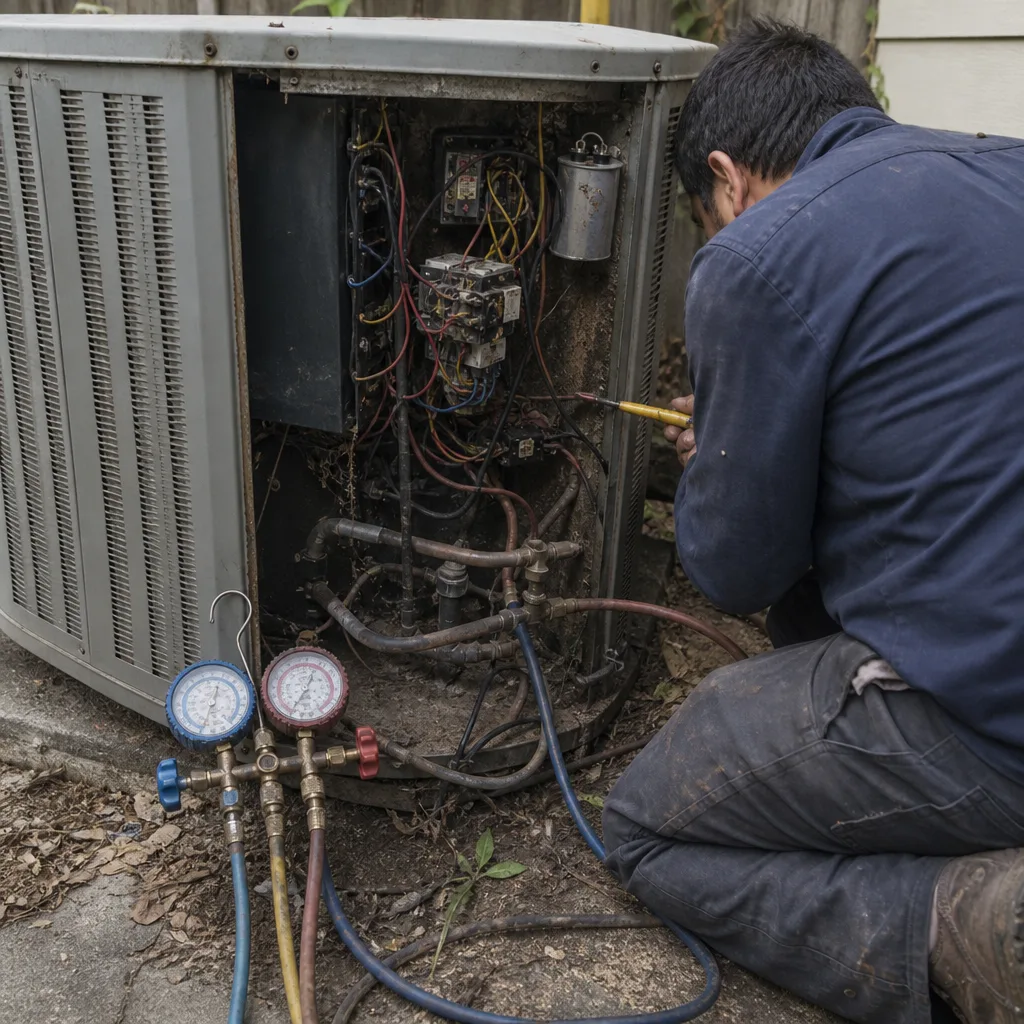 Before
 After
 Before
 After
 Before
 After
When to Call a Professional
Call for help the moment you can’t keep the house in a safe temperature, or when you hear, see, or smell something wrong with the system. Specific scenarios: the AC is blowing warm air during a hot afternoon, the outdoor unit hums without starting, the breaker trips on every restart, the thermostat is blank or unresponsive, refrigerant lines are icing up, or the system has taken on water during a storm. Also call if you have an elderly household member and the AC has stopped. Those cases aren’t a “wait and see.”
Hartwell AC Repair offers free estimates in League City – call (866) 412-4707. We answer 24/7, with fast dispatch from 7am to 7pm, Sunday through Friday. Our technicians have up to 12 years of experience and cover both heating and cooling under one company, so a single call handles the whole system.
Frequently Asked Questions
In clear summer weather with the outdoor high near 100°F, an interior temperature can exceed 95°F within about four hours of a cooling failure. That’s enough to cause heat stress in a healthy adult, and faster for elderly residents or anyone with a heart or respiratory condition. Once the AC fails, calling a technician right away is the first step; moving vulnerable household members to a cooled space is the second. Call (866) 412-4707 for an appointment – estimates are free.
Yes – turn it off at the thermostat and cut power at the outdoor disconnect before a storm. This prevents the compressor from trying to start in the middle of power flickers, and it prevents a surge from damaging the compressor when power returns. Cover the thermostat, remove loose objects within 10 feet of the outdoor unit, and do not wrap the unit in plastic. After the storm, wait at least 5 to 10 minutes after restoring power before restarting the system. If the unit doesn’t start cleanly, call a professional.
Many manufacturers build a compressor lockout into their controls that delays restart for a set period after power interruption, and the reason is compressor protection. Restarting a compressor before pressures have equalized can damage it. When power comes back, leave the thermostat off, restore the outdoor disconnect, wait at least 5 to 10 minutes, then turn the system on to a normal temperature setting. If the system doesn’t start or makes grinding or humming sounds, stop and call (866) 412-4707. We answer 24/7.
Galveston County public libraries, local community and senior centers, and large air-conditioned commercial spaces are typical options during a heat emergency, and county emergency management channels publish any officially activated cooling centers during a declared event. Anyone 65 or older, an infant, or showing signs of heat illness should move to cooling first – call 911 for signs of heat stroke. In parallel, call (866) 412-4707 to get a repair scheduled so you’re not cooling off-site longer than necessary.
If the failure is a single component on a mid-life system – a capacitor, a blower motor, a thermostat – repair is almost always the right call. If the compressor has failed on an older system, or you’ve had multiple significant repairs in the last year or two, replacement is worth a serious conversation. A company that does both repair and replacement can give you an honest answer; a company that only installs cannot. Call (866) 412-4707 to get a diagnosis and a written estimate started.
Have your model and serial numbers photographed, your warranty paperwork and service history in a waterproof envelope with a second copy stored somewhere else, and your HVAC contractor’s number written down along with a phone saved in your contacts. Have backup power for fans, a battery-powered radio, and water on hand. Know your home’s coolest room and the nearest cooling point in Galveston County. And have your outdoor disconnect identified before the storm so cutting the power is a 30-second step, not a scavenger hunt.
The Bottom Line
There are two kinds of HVAC emergencies in League City, and they call for two different plans. A summer cooling failure is a health problem that moves on a four-hour clock in a hot house: call for help before the interior temperature crosses the danger line, and move vulnerable family members to cooled space early. A storm-related outage is a recovery problem: cut the power before the storm, protect the condenser without wrapping it, restart slowly with a compressor lockout in mind, and keep your documentation somewhere other than the house. Both scenarios reward the same habits: know the number, know the plan, and know which scenario you’re in before you’re in it. Call (866) 412-4707 for a free estimate.
Written by the team at Hartwell AC Repair.