
Last updated November 15, 2026
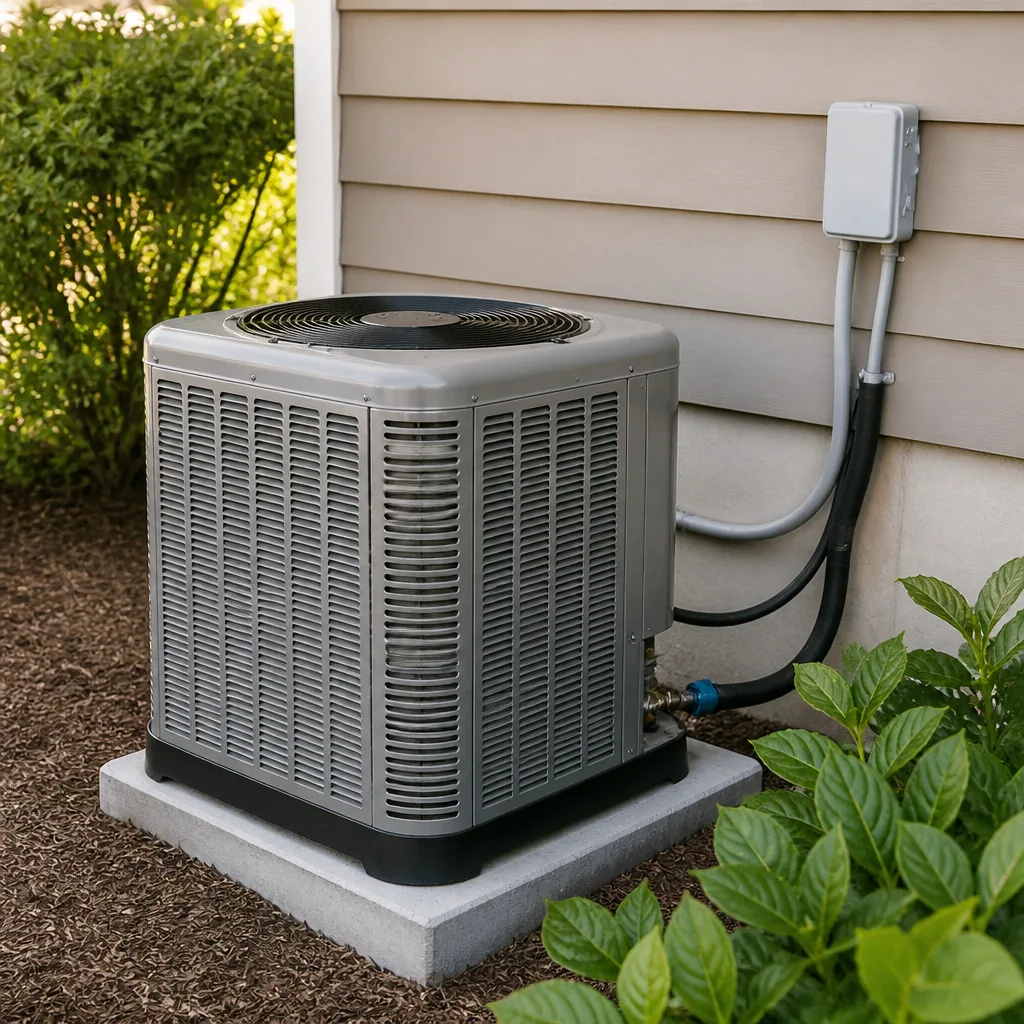 AC repair
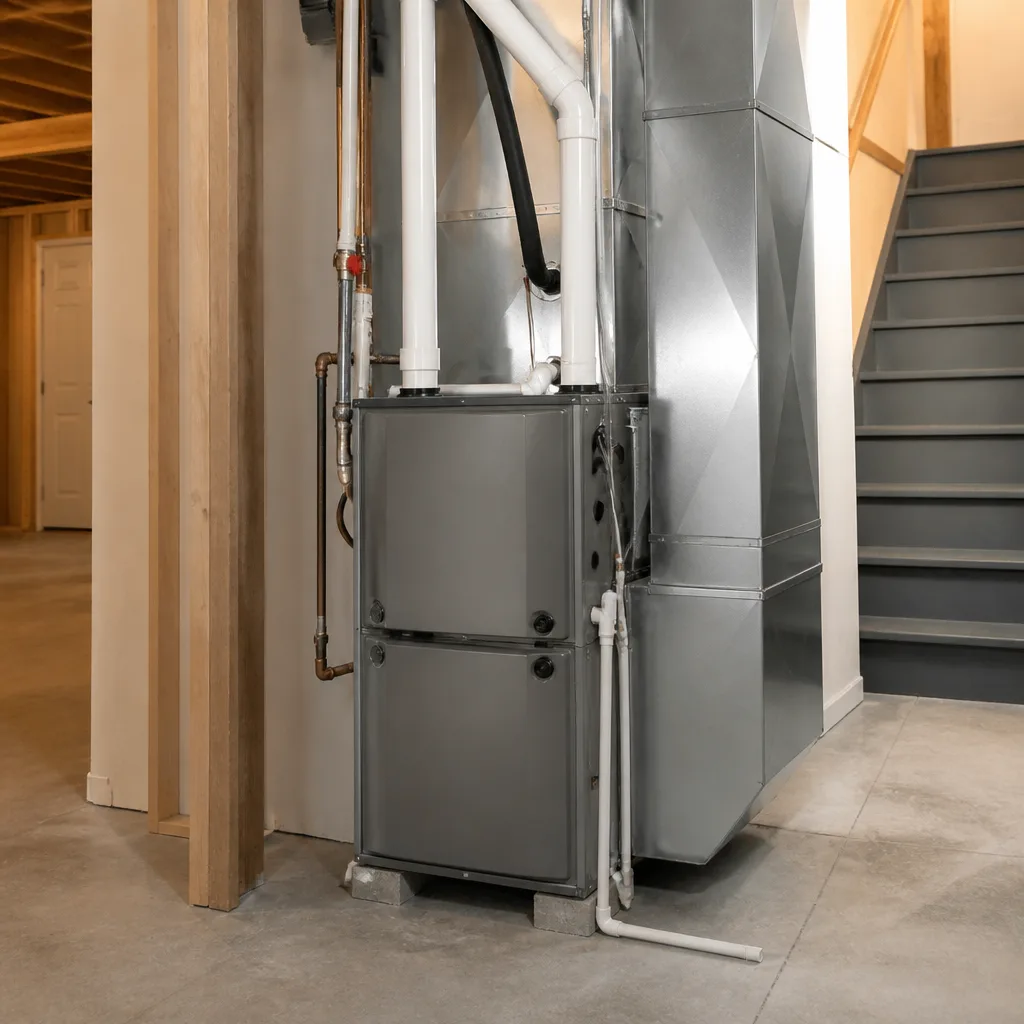 Furnace & heating
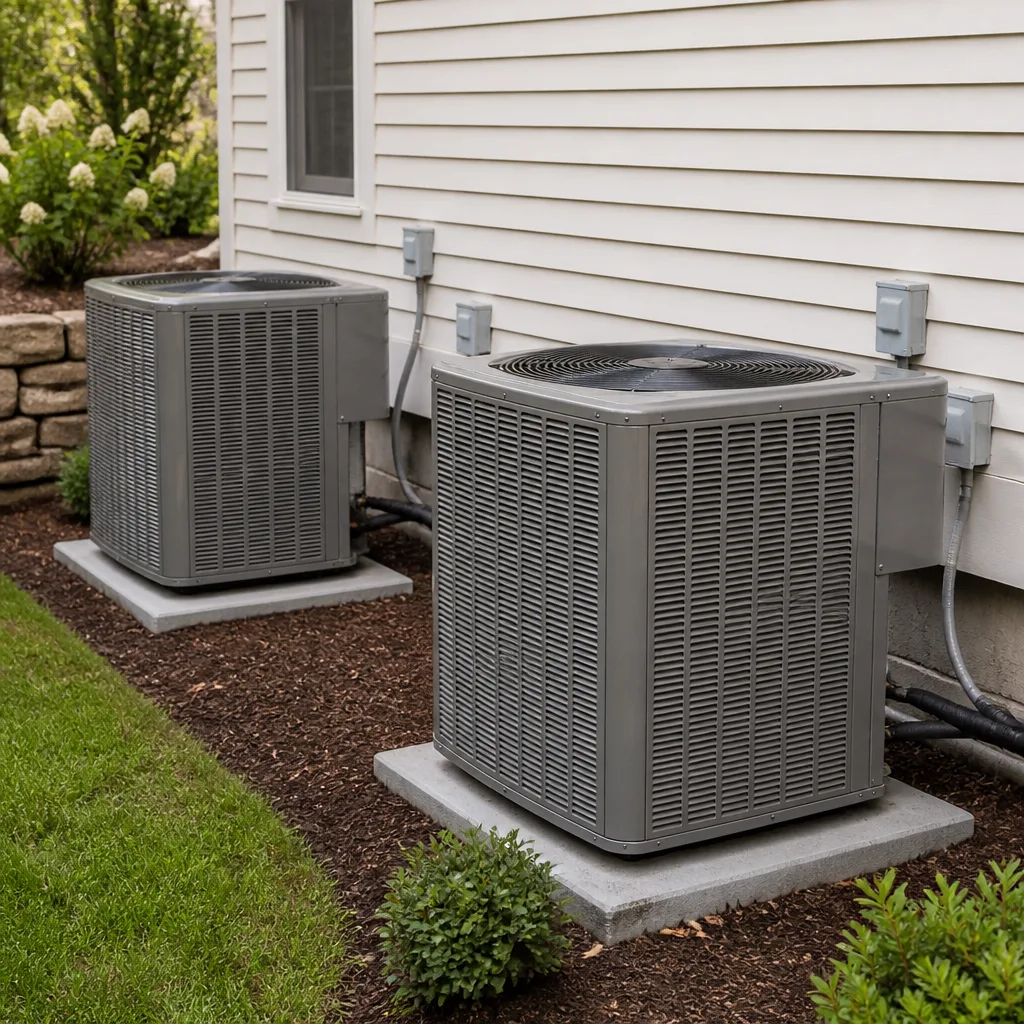 Heat pumps
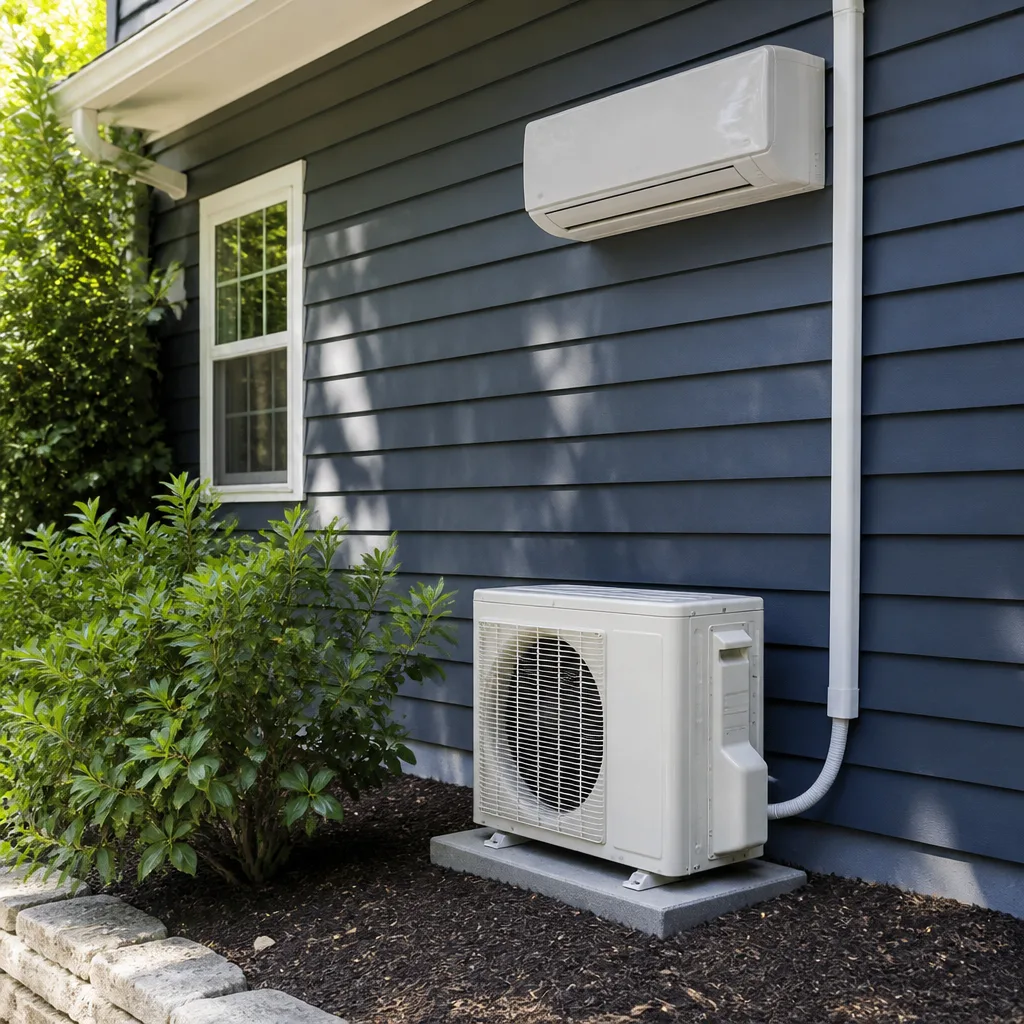 Ductless mini splits
 Carrier
 Trane
 Goodman
Seasonal tune-up and full diagnostic on your Carrier, Trane, or Goodman system - readings shown to you before any repair is proposed
Diagnosis first, numbers second - you approve the repair price before a single part goes in.
Get your free estimateHow to Hire an HVAC Contractor in League City: A Step-by-Step Guide
Most hiring guides tell you to get three quotes and check for a license. That advice is fine as far as it goes, but it misses what actually separates a good HVAC contractor from a bad one in League City. Getting three quotes is easy. Getting three quotes from companies that are all worth hiring is the hard part. And in a market like ours, where a bad storm can knock out cooling for whole neighborhoods and demand spikes overnight, the contractors who cut corners have learned exactly how to look legitimate on paper. They have a license number that checks out, a website that looks polished, and a quote that comes in below everyone else’s. Then the work gets rushed, the equipment gets undersized, and the same crew is nowhere to be found a season later.
This guide walks through the steps that actually protect you: verifying a Texas HVAC license in the TDLR database, asking the right questions about brand access, insisting on a load calculation before any replacement quote, spotting storm-season red flags, and reading the contract clauses that decide who pays when something goes wrong. Whether you’re facing a system failure or planning a replacement, you’ll come away knowing exactly what to ask and what to walk away from. We’re writing this from League City, where we work on whatever system you have and seeing these patterns play out across the Bay Area firsthand.
Quick Answer
To hire an HVAC contractor in League City, verify their Texas license through the TDLR database, confirm they work on your brand (not just one they prefer to sell), demand a written load calculation before any replacement quote, get a written estimate that names specific equipment model numbers, and read the contract for warranty assignment and permit responsibility. A legitimate contractor will welcome all of it. One who pushes back on any of it is telling you something.
Styles & brands we work with
- AC repair
- Furnace & heating
- Heat pumps
- Ductless mini splits
- Carrier
- Trane
- Goodman
Table of Contents
- Step 1: Verify the Texas HVAC License in Under Two Minutes
- Step 2: Ask the Brand-Access Questions
- Step 3: Insist on a Load Calculation Before Any Replacement Quote
- Step 4: Watch for Storm-Season Red Flags in Greater Houston
- Step 5: Read the Quote and Contract for the Clauses That Matter
- Step 6: The On-Site Questions That Sort Good From Bad
- Step 7: Repair or Replace Decisions in League City
- Common Mistakes to Avoid
Step 1: Verify the Texas HVAC License in Under Two Minutes
Every HVAC contractor working in Texas must hold a license through the Texas Department of Licensing and Regulation, or TDLR. Verifying it takes about two minutes on the TDLR website, and it’s the single most important step in this entire guide. You search the company name or the license number, and the database tells you whether the license is active, expired, or has any public disciplinary history. If the company can’t give you a license number to look up, that’s your answer right there.
An active license means the contractor has met the state’s requirements for experience, insurance, and continuing education. That’s a real baseline, and it matters. But here’s what an active license does not guarantee: that the technician coming to your door is competent, that the equipment will be sized correctly, that the install will be done with care, or that the company will honor its warranty. A license is a floor, not a ceiling. It tells you the contractor is legally allowed to do the work. It doesn’t tell you the work will be good.
What to check in the TDLR database:
- The license status – it should read “Active,” not “Expired” or “Delinquent.”
- The license type – confirm it covers the residential work you need done.
- Any disciplinary actions – the database lists public complaints and enforcement actions if they exist.
- The licensed name vs. the name on the quote – make sure the quote comes from the licensed entity, not a subcontracted side name.
Ask the contractor to text or email you their license number before the visit. If they send it without hesitation, they’re organized and legitimate. If it takes three calls to produce, that tells you something about how they’ll handle a warranty claim, too.
Step 2: Ask the Brand-Access Questions
Here’s an issue most hiring guides skip entirely: a contractor locked into one manufacturer has a financial reason to recommend that brand regardless of whether it actually fits your home. If a company’s showroom, marketing, and manufacturer rebate program are all built around a single name, then every recommendation it makes runs through that filter. That’s not necessarily dishonest, but it’s not neutral either.
You want to hear something like this: we work on whatever system you have. We’re certified to work on nine major HVAC brands – Carrier, Trane, Lennox, Goodman, Rheem, York, Daikin, Bryant, and American Standard – which means the recommendation you get is shaped by what your home needs and your budget allows, not by what the company prefers to sell. Budget-conscious homeowners in League City who want a Goodman system shouldn’t be talked out of it, and a homeowner who wants the durability of a Trane or a Lennox shouldn’t be steered away because the contractor can’t get the parts.
Ask these questions directly:
- Which brands are you certified to install and service? The answer should be a real list, not one name.
- Can you service my existing system even if you didn’t sell it to me? (If they say no, keep interviewing.)
- Do you offer options across budget, mid-range, and premium tiers – or just one line?
- Are you an authorized dealer for multiple brands, or just one? (Dealer status affects pricing and warranty service access.)
Brand-agnostic expertise is the difference between a contractor solving your problem and a contractor selling their product. Nine brands, one company – that’s the standard to hold any contractor to in League City.
Step 3: Insist on a Load Calculation Before Any Replacement Quote
This is the step that most homeowners skip, and it’s the step that decides whether your new system actually performs. A load calculation (sometimes called a Manual J) is a room-by-room assessment of how much heating and cooling your home actually needs, based on square footage, insulation, window area and orientation, ceiling height, duct condition, and local climate. No two homes are identical, and no two homes should get the same tonnage. A contractor who quotes you a replacement system without doing a load calculation is guessing, and guess wrong and you’ll be living with the consequences for the next fifteen years.
Undersized equipment runs constantly and still doesn’t keep up. Oversized equipment cools too fast, shuts off before it dehumidifies properly, and leaves a cold, clammy feeling in the summer – a real problem in League City, where our humid Gulf air is half the battle. Sizing matters more here than in drier climates, and a shortcut on the load calculation is exactly the shortcut that leads to comfort complaints after the install.
What a legitimate load calculation looks like:
- Time on the property – a real assessment takes time, not a five-minute walkthrough.
- Measurements of every room – square footage, window area, ceiling height.
- Insulation and duct inspection – what’s in the walls and how well the ducts are sealed.
- Window and door orientation – which direction the house faces and where shade falls matter.
- A written report – the numbers should be documented, not rounded to the nearest ton in the contractor’s head.
If a contractor quotes a replacement without a load calculation, that’s an automatic disqualification. It’s not worth arguing over. Move on to the next name on your list, and don’t look back. New AC installation deserves the same standard every time.
Step 4: Watch for Storm-Season Red Flags in Greater Houston
Demand for HVAC repair in and around League City surges when a Gulf storm rolls through, and unfortunately, so does the population of contractors willing to take advantage of that surge. We’ve seen the pattern across the Bay Area for years: a stretch of bad weather, a wave of calls, and a handful of companies that appear overnight and disappear once the emergency is over. The newest name in your search results is often not the one to trust, and the fastest callback is not always the best sign.
Here are the red flags specific to storm season:
- Door-knockers offering a discount on the spot. Storm-chasers often work by canvassing neighborhoods hardest hit. Legitimate HVAC contractors get work through referrals and repeat customers, not by going door-to-door after a weather event.
- Quotes delivered from the truck without a written estimate. A verbal quote after a storm is almost always higher than a written estimate under calmer conditions.
- Same-day install offers on full replacements. Replacement work requires a load calculation, equipment sourcing, and scheduling – it doesn’t happen same-day. If a contractor offers it, they’re planning to do it badly.
- No physical office address to verify. The company should have a verifiable business footprint, a license on file, and an insurer they can name if asked.
- Pressure to sign before the estimate is finalized. Urgency that comes from the contractor rather than the actual breakdown is a sales tactic, not a customer service gesture.
Repair work on a failed system during extreme heat is genuinely urgent, and we treat it that way. But speed during a repair and speed on a replacement are very different promises. A contractor who conflates the two is one to be cautious with.
Step 5: Read the Quote and Contract for the Clauses That Matter
Most homeowners skim the contract and sign at the bottom. That’s a mistake, and it’s where the real risk lives. The clauses that matter most in an HVAC contract are rarely buried in fine print – they’re usually in plain sight, just easy to skip past. Three clauses decide who’s responsible when things go wrong, and they’re worth reading twice.
Warranty assignment. Manufacturer warranties need to be assigned to you, the homeowner, not to the contractor. If the warranty stays with the contractor’s account, you may not be able to make a claim if the company goes out of business or gets sold. Confirm in writing that the manufacturer warranty is registered in your name and document the warranty term for both parts and labor – they’re usually different lengths.
Permit responsibility. Most cities require a permit for HVAC replacement work, and the permit should be pulled by the contractor, not by you. A contractor who asks you to pull the permit is either trying to avoid an inspection or isn’t properly licensed for the work. Confirm in writing that the contractor is pulling the permit and that the inspection is their responsibility.
Equipment model specificity. The quote should list the exact make and model number of the equipment being installed, not just “3-ton AC” or “high-efficiency furnace.” A vague spec leaves room for substitution, and substitutions usually move down-market, not up. If the quote says “Trane or equivalent,” ask what the equivalent is and get it in writing.
Look for these in writing on the quote, not just in a conversation:
- Make and model number of both indoor and outdoor equipment.
- SEER rating (or its equivalent for heat pumps), listed explicitly.
- Warranty terms for parts and labor, in years.
- Permit inclusion or exclusion, stated clearly.
- Line-item scope – what’s included and what’s not (ductwork, line sets, thermostat, etc.).
- Payment schedule – deposits, progress payments, and final payment timing.
If the quote doesn’t have these, ask for a revised one. If the contractor resists, that tells you what working with them will be like. And if you’re weighing furnace repair against replacement, the same contract discipline applies to the smaller job.
Step 6: The On-Site Questions That Sort Good From Bad
When the technician is standing in your home, you have about thirty minutes to figure out whether this company is the right one. Ask these questions directly and watch how they answer. A good contractor’s answers are specific and unhurried. A bad contractor’s answers are vague, deflecting, or rushed toward a signature.
- “Can you show me your license number?” They should have it ready. Verifying it takes two minutes on the TDLR site.
- “What brands are you certified to work on?” You’re listening for a list, not one name. Brand-agnostic is the goal.
- “Will you do a load calculation?” Any answer other than “yes” is a disqualifier if you’re considering replacement.
- “How do you explain the difference between the systems you’re recommending?” You want to hear cost, longevity, and efficiency trade-offs – not a single recommendation with no alternatives.
- “What’s your warranty policy on labor, and how do I claim it?” Labor warranties vary widely and are where complaints usually surface.
- “Will you pull the permit, and who’s responsible for inspection?” The answer should be “we do” for both.
- “Can you give me a written estimate before I commit?” Always yes. Always in writing.
Insist on a free written estimate before any work begins. Estimates should be free and the price should be set per job in writing – not a verbal number that grows once the work starts. If the technician won’t put a firm number on paper, that’s the entire conversation, and you can end it politely.
Step 7: Repair or Replace Decisions in League City
The repair-versus-replace question is where honest contractors and sales-driven contractors split most visibly. In our experience, the honest answer usually comes down to three factors: the age of the system, the cost of the needed repair relative to replacement, and whether the system is otherwise sound. A salesman who only does installs will lean toward replacement. A patch-job technician who only does repairs will lean toward repairing a unit that should have been replaced two years ago. You want a contractor who does both and will tell you which one actually makes sense for your situation.
There’s no single right answer, but here’s how to think through it:
- Age of the system. Most residential systems last roughly 12-18 years with proper maintenance. If yours is approaching or past that range, replacement often makes more financial sense than a major repair.
- Repair cost as a percentage of replacement. If a single repair is approaching a significant fraction of a new system’s cost, replacement deserves serious consideration – especially on an aging unit.
- Efficiency gains. A new system typically runs more efficiently than an older one, though the long-term savings depend on how much you actually run the system and how well your home is sealed.
- Refrigerant type. Older systems use refrigerants that are being phased down for environmental reasons, and servicing them is getting more expensive. If your system is on an older refrigerant, factor that into the math.
- Comfort complaints. If your current system has always left hot spots, humidity problems, or uneven cooling, replacement is a chance to fix the root cause – but only if the contractor does a load calculation and checks the ducts.
The right answer is the one that fits your system, your home, and your budget – not the one that fits a contractor’s sales target. We’re the company that tells you honestly which way to go, which is why our League City customers keep coming back to us when the decision comes around again.
Common Mistakes to Avoid
- Skipping the TDLR check. Even experienced homeowners assume a quote proves the license. It doesn’t. Look up the number yourself.
- Choosing the fastest callback after a storm. Speed is not a credential. In League City’s post-storm market, the companies that call back fastest are often the ones least equipped for the work.
- Accepting a quote that names a brand but not a model number. “Trane or equivalent” leaves room for substitution. Get the exact model.
- Letting a contractor skip the load calculation. This happens more often than it should on replacement quotes, and it’s the single most common cause of post-install comfort complaints.
- Signing a contract that doesn’t spell out who pulls the permit. Most cities require a permit for replacement, and if the clause is silent, you can end up paying the permit fee and chasing code violations yourself.
- Working with a contractor locked to one brand. You’ll get that brand recommended no matter what your home actually needs.
- Assuming “as-is” warranty language is standard. Labor warranties on HVAC work vary widely. Ask about the term explicitly.
See the difference
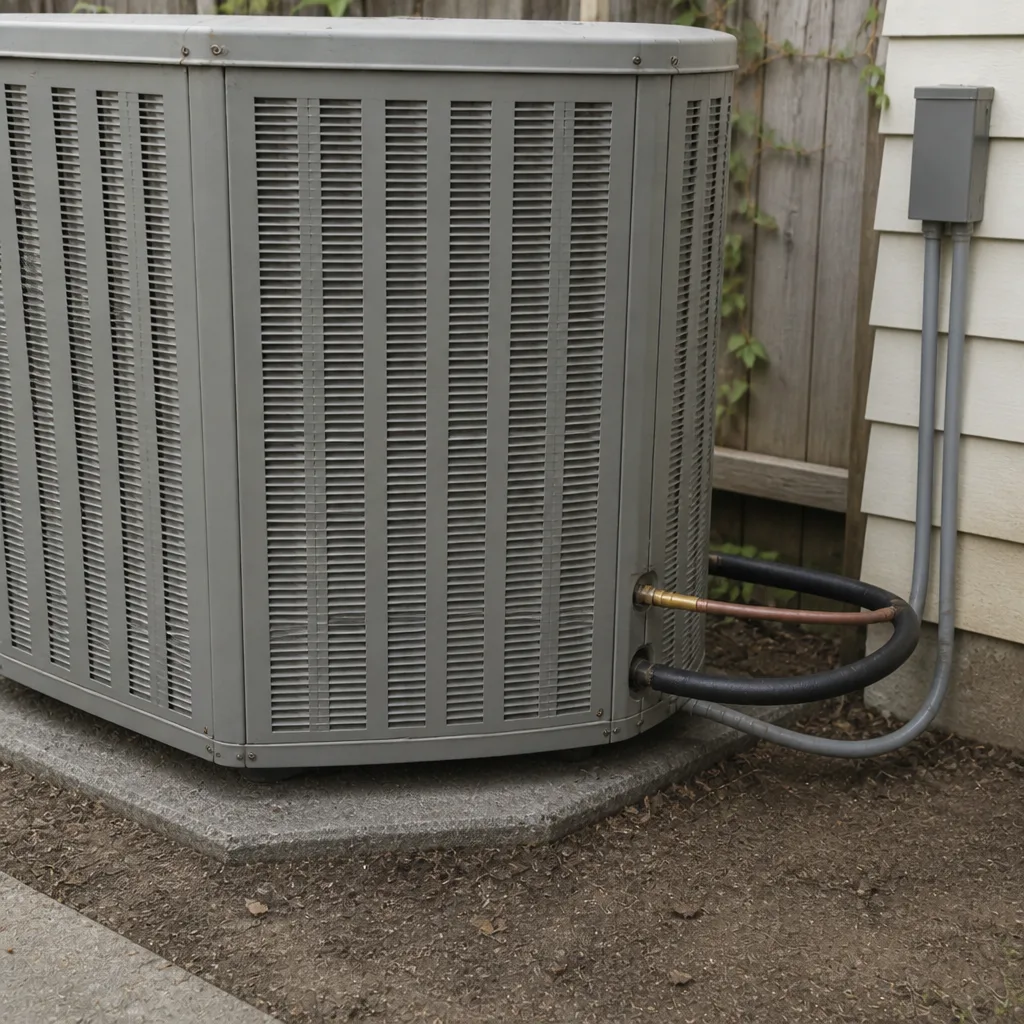
 Before
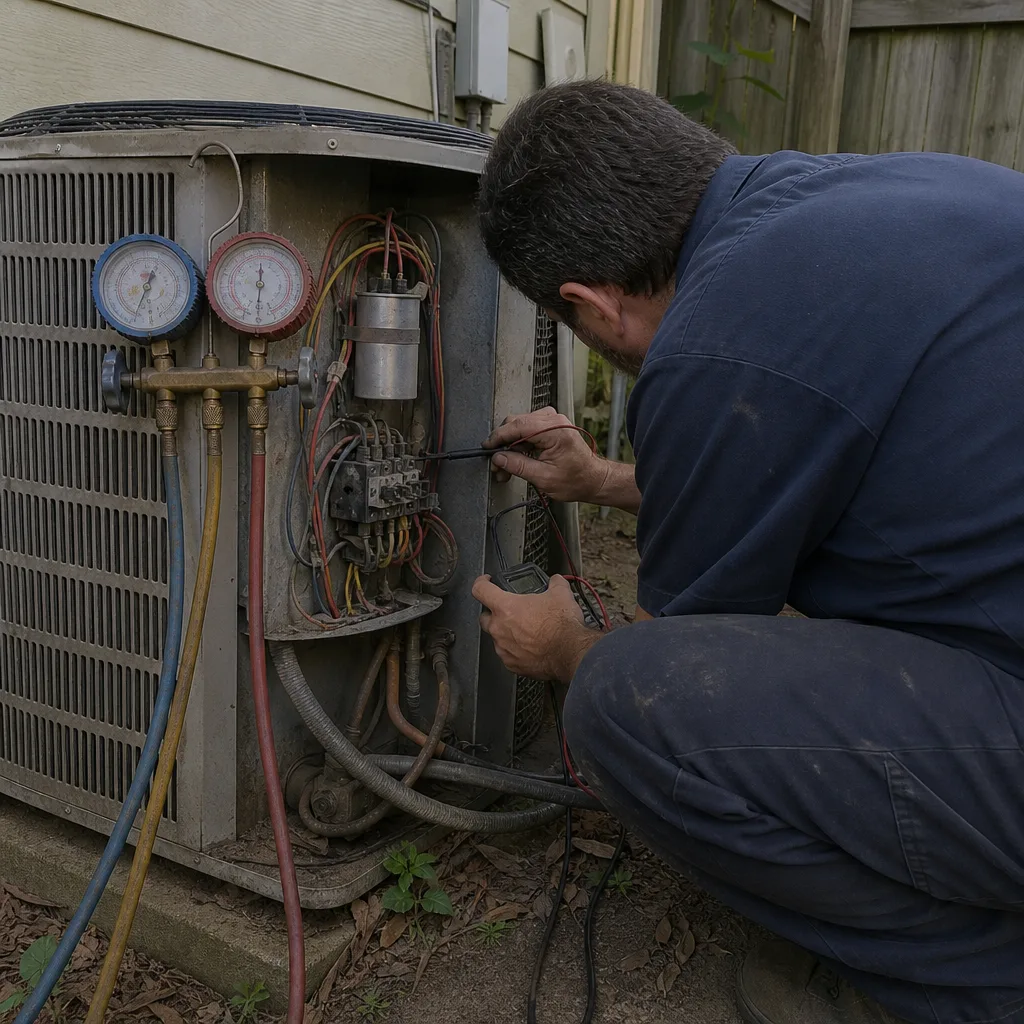
 After
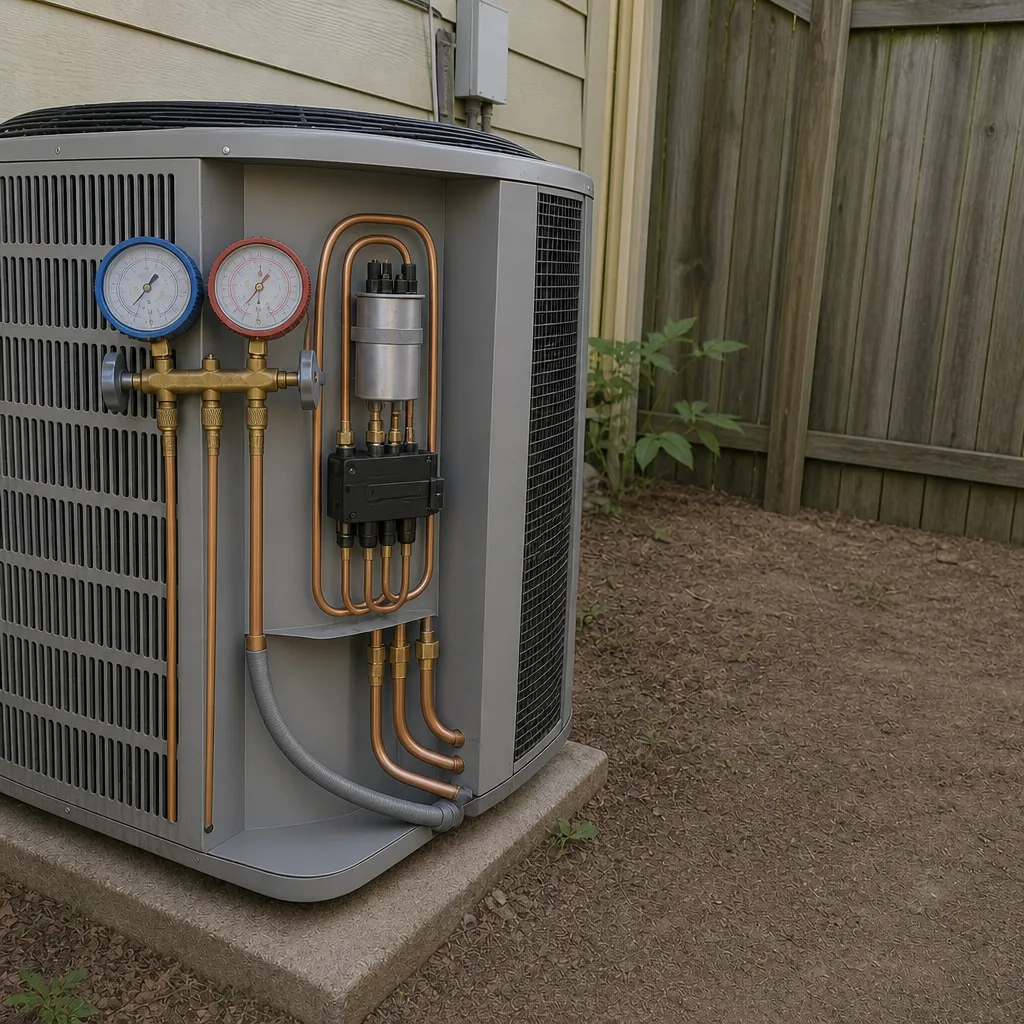
 Before
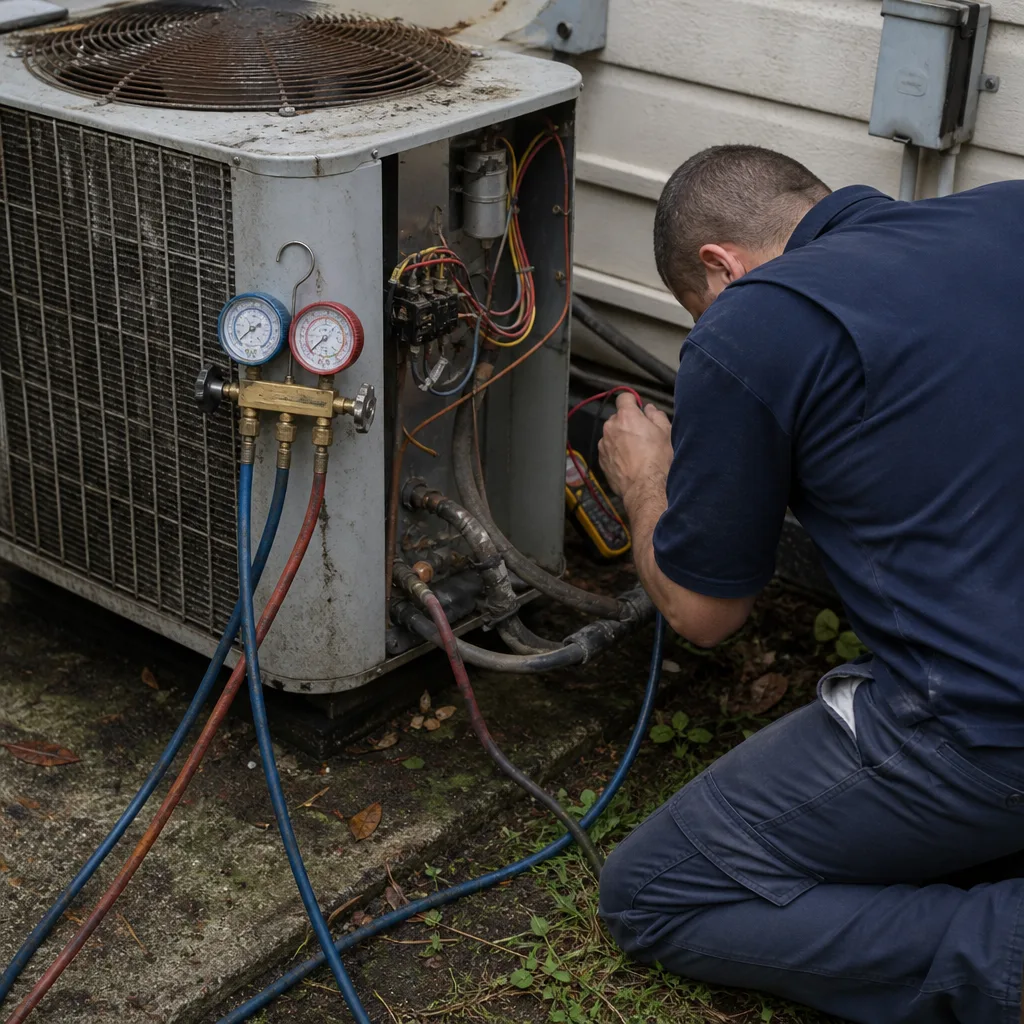
 After
 Before
 After
When to Call a Professional
Some HVAC problems are truly urgent and some can wait a few days for a scheduled visit. Call a professional if your system has stopped producing cool air entirely, if you smell gas near a furnace, if you see visible ice on the indoor coil or refrigerant lines, if your electric bills have jumped without explanation, or if the system is making noises it never used to make. These are conditions where waiting generally makes the underlying problem worse and the repair more expensive. If your situation is a comfort question rather than a safety question – a room that runs warmer than the rest of the house, a humidity problem that doesn’t clear – a scheduled appointment works fine.
Hartwell AC Repair offers free estimates in League City – call (866) 412-4707. We answer 24/7. Fast dispatch from 7am to 7pm, Sunday through Friday. If a call comes outside dispatch hours, it’s booked into the next opening, Sunday through Friday, 7am to 7pm.
Frequently Asked Questions
Use the Texas Department of Licensing and Regulation (TDLR) website and search for the contractor’s license number or company name. It takes about two minutes, and the database shows whether the license is active, expired, or has any public disciplinary history. Ask the contractor to send you their license number before the visit so you can check it.
Yes, insist on one. A load calculation (Manual J) determines the right system size based on your specific home, and without it the contractor is guessing. An oversized system cools too fast and doesn’t dehumidify properly, which is a real problem in our humid Gulf climate. Any contractor who quotes a replacement without a load calculation should be disqualified. Call (866) 412-4707 for a free estimate with a load calculation included.
A contractor locked into one brand has a financial reason to recommend that brand regardless of fit. A brand-agnostic contractor can honestly match equipment to your home and budget – whether that means a Goodman system for value, a Rheem for reliability, or a Trane or Lennox for premium performance. Ask for a list, not a single name. If you’re only offered one brand, keep looking.
Door-knockers offering on-the-spot discounts, verbal quotes without a written estimate, same-day replacement offers, no verifiable office address, and pressure to sign before the estimate is final. Legitimate contractors get work through referrals and repeat customers, not canvassing after bad weather. Slow down the decision when the urgency is coming from the contractor’s side.
Warranty assignment (make sure the manufacturer warranty is registered in your name), permit responsibility (the contractor should pull it, not you), and equipment model specificity (exact make and model numbers, not just “3-ton AC”). Also confirm SEER rating, warranty terms for parts and labor, and a line-item scope of what’s included. If any of these are missing, ask for a revised contract.
Most residential systems last roughly 12-18 years with proper maintenance and regular filter changes. Our humid climate and heavy summer cooling load can push that toward the lower end of the range if the system runs hard. If your unit is over 12 years old and facing a major repair, replacement usually makes more sense than another fix. Call (866) 412-4707 for an honest repair-or-replace conversation.
The Bottom Line
Hiring an HVAC contractor in League City comes down to a handful of steps that most homeowners skip: verify the TDLR license, confirm the contractor is brand-agnostic, insist on a load calculation before any replacement, watch for storm-season red flags, and read the contract clauses that decide who’s responsible when something goes wrong. Those five things separate a contractor who is actually going to take care of you from one who just looks the part. If a contractor resists any of them, that’s your answer – move to the next name on your list. A legitimate HVAC company will welcome every one of these questions, and welcome them with specifics.
If you’d like an honest walkthrough of your system – whether that’s a Hartwell AC Repair diagnosis on a system that’s failing or a plan for a replacement you’re considering – we’re here for it. Free estimates, brand-agnostic recommendations, and a straight answer about repair versus replace. Call (866) 412-4707. We answer 24/7. Fast dispatch from 7am to 7pm, Sunday through Friday. Our technicians have up to 12 years of experience and work on whatever system you have.
Written by the team at Hartwell AC Repair.