
Last updated November 15, 2026
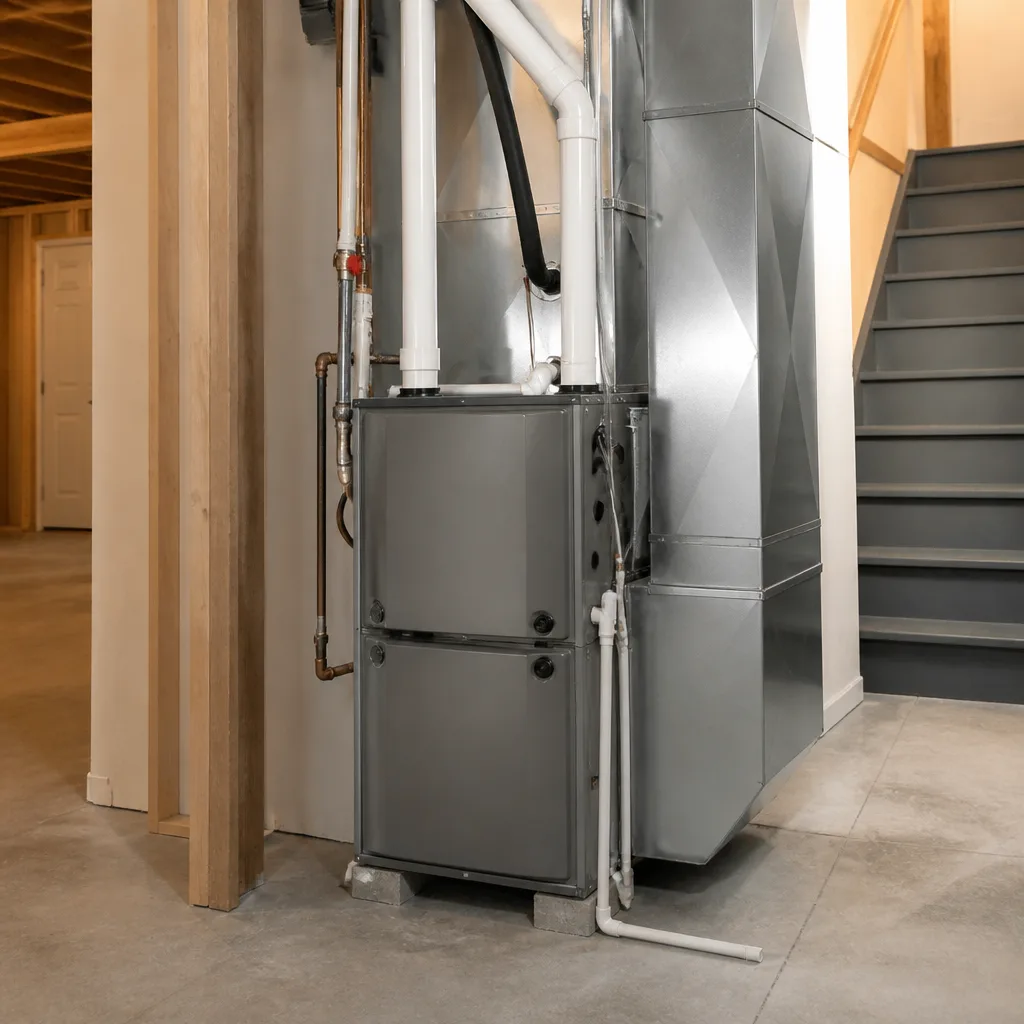 Furnace & heating
 AC repair
 Heat pumps
 Ductless mini splits
 Carrier
 Trane
 Goodman
Seasonal tune-up and full diagnostic on your Carrier, Trane, or Goodman system - readings shown to you before any repair is proposed
Diagnosis first, numbers second - you approve the repair price before a single part goes in.
Get your free estimateFurnace Replacement Maintenance Checklist for League City Homeowners
A brand-new furnace can sail through its installation inspection in October and still stumble on its first real cold snap in January. Not because the install was wrong, but because nobody ran a startup check after months of sitting idle through a League City summer and fall. In a climate where heating season is short and sudden, the furnace that needs the most attention is often the newest one in the house. This guide walks League City homeowners through what a first-season startup should look like, which maintenance tasks actually protect the warranty, how to confirm the flue venting was sized right, and what to watch for in year one versus year two. You’ll finish knowing exactly what to ask your contractor before the first heating call.
Quick Answer
A newly replaced furnace in League City needs a first-season startup check before cold weather arrives: a combustion and ignition test, a flue-venting verification, a condensate drainage inspection, and a gas-valve leak check. Then it needs a licensed annual tune-up every heating season after that. The biggest risk isn’t skipping maintenance years later; it’s never running a startup check on a unit that sat dormant through the long warm season.
Styles & brands we work with
- AC repair
- Furnace & heating
- Heat pumps
- Ductless mini splits
- Carrier
- Trane
- Goodman
Table of Contents
- Why Furnaces Fail After Dormancy in League City
- The First-Season Startup Sequence to Request
- How to Confirm Your Flue Venting Was Sized Correctly
- The Humidity and Condensate Drain Problem
- What the Warranty Actually Requires (and What You Can Do Yourself)
- Year One vs. Year Two: Normal Settling vs. Early Warning Signs
- Your Annual Furnace Maintenance Checklist
Why Furnaces Fail After Dormancy in League City
Most of the country runs a furnace for four to six months straight. In League City, a furnace might run for a handful of cold snaps scattered through December and January, then sit untouched for eight or nine months. That pattern is hard on a mechanical system. Seals dry out. Dust settles into the burners and the flame sensor. The inducer motor sits idle long enough that its bearings can stiffen. Electrical connections loosen with the seasonal expansion and contraction of a house that spends most of the year cooling, not heating.
When the first genuine cold front rolls through, that dormant furnace has to go from zero to full operation in one cycle, and every component in the combustion path fires at once. A unit that passed its install inspection without a hiccup can trip a pressure switch on that first real run-through. That’s what we mean by a dormancy problem: not a bad installation, just a system that was never cycled at load.
We’ve worked on enough League City systems across the nine brands we service – including Bryant, American Standard, Carrier, and Trane – to know the pattern repeats. It isn’t a brand issue. It’s a climate pattern. Homes in the Clear Lake, South Shore, and Bay Ridge areas see the same thing: the heating system is treated as the afterthought because cooling does the heavy lifting most of the year. The maintenance schedule for a League City house should be weighted differently than the one that gets handed to homeowners in colder regions.
That’s the case for a startup protocol, and it’s the reasoning behind everything else in this guide.
The First-Season Startup Sequence to Request
When a furnace is replaced, ask the installing contractor to run a full startup sequence at the end of the install, and then again after the first few weeks of real cold-weather use. That second visit is the one homeowners rarely ask for and the one that catches problems while they’re still cheap to fix. Here’s what a complete startup sequence should include.
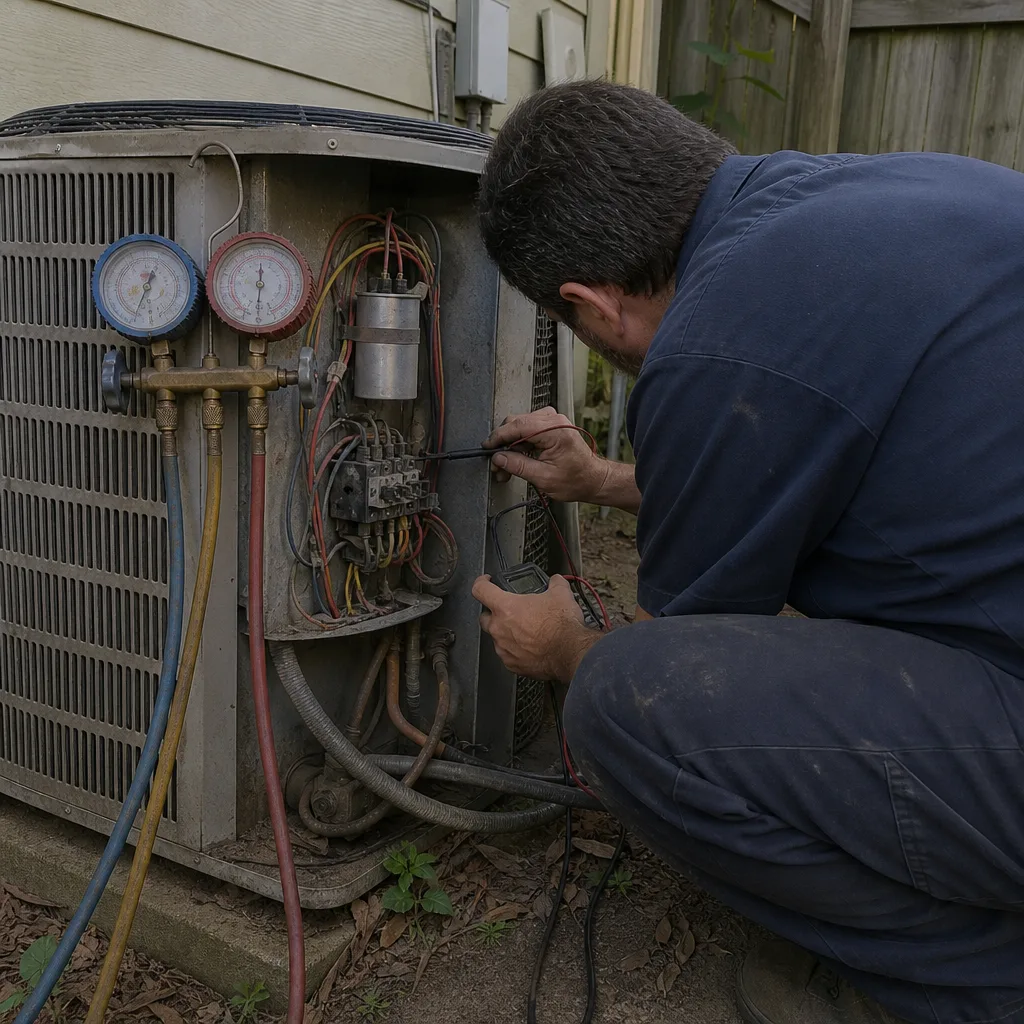
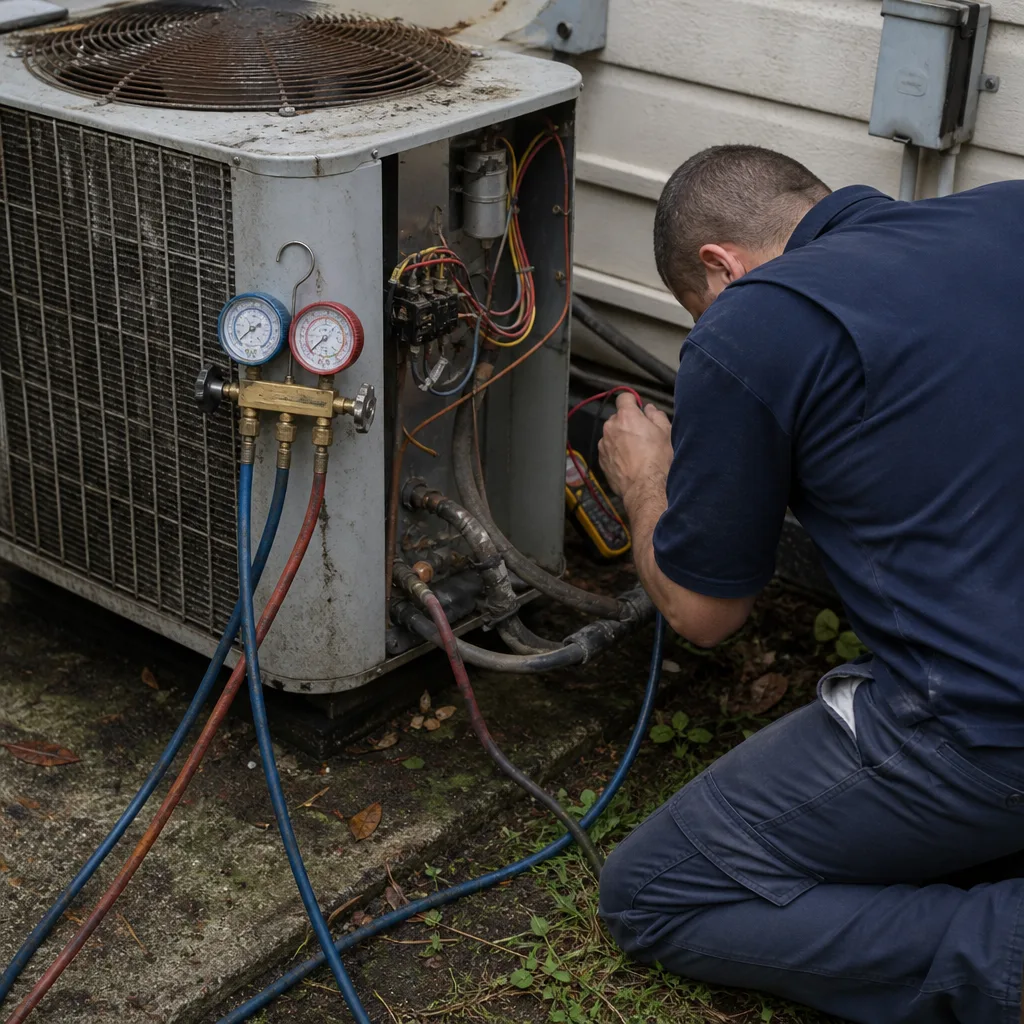
- Call for heat and observe the ignition cycle. The technician should watch the full ignition sequence – inducer motor ramp-up, pressure switch proving, ignition, flame proving – and confirm it completes cleanly without retries or lockouts.
- Combustion analysis at the flue. A combustion analyzer reading confirms the burn is clean and the air-fuel mix is set correctly for how your specific unit is venting into your home.
- Temperature rise measurement. Measuring the difference between return and supply air at the unit confirms the blower is moving the right air volume for the furnace. A unit that’s choked from undersized ductwork or a poorly set blower speed can run hot and short-cycle.
- Gas supply pressure check at the valve. Inlet and manifold pressures should be verified with a manometer. This catches gas valve issues that the ignition test alone won’t reveal.
- Condensate trap and drain verification. If the unit is a high-efficiency condensing furnace, the technician should confirm the trap primes correctly and the drain line runs to a safe discharge point with proper slope.
- Flue venting verification. The venting installation should be checked against the manufacturer’s spec for length, slope, pipe material, and termination (see the section below).
- Filter and airflow confirmation. A fresh filter, correctly sized, plus a quick static pressure measurement across the blower, catches airflow restriction while it’s easy to correct.
- Carbon monoxide test at the supply registers. A CO meter check at one or two supply registers confirms no combustion gas is bleeding into the airstream.
- Thermostat staging verify. Confirm the thermostat cycles correctly on first-stage and second-stage heat (if applicable) and that the fan behavior is set as expected.
- Cycle through a full heat call and cool-down. The tech should let the furnace run a complete cycle and shut down normally to confirm the unit doesn’t overheat or trip its high-limit switch on the first sustained run.
That’s the protocol. Ask for it every time a furnace gets replaced. If you’re already past that window and want a startup check run now, call (866) 412-4707 to schedule a first-season furnace repair and check – the estimate is free, the report is written, and we work on whatever system you have in the house.
How to Confirm Your Flue Venting Was Sized Correctly
Here’s a corner that gets cut more often than it should. A homeowner replaces an old oversized 100,000 BTU furnace with a new 60,000 BTU high-efficiency model. The old furnace had a metal flue sized for 100,000 BTUs. The new unit is a condensing model with a smaller, often PVC, vent pipe requirement. If the installer simply adapts the new unit to the old flue without matching the sizing to the new unit’s spec, you end up with problems that show up months later.
Oversized venting on a modern high-efficiency furnace can cause flue gas to cool and condense in the wrong places. Undersized venting can cause back-pressure, incomplete combustion, and nuisance pressure switch trips. Either one is a real safety issue because it affects how combustion gases leave the house.
To confirm the venting was sized right, ask for these three things:
- The manufacturer’s venting spec sheet for your exact model. Every furnace has a spec that establishes maximum vent run length, number of elbows, pipe diameter, slope, and termination type. The installer should have used it.
- Verification of the actual installed vent length and elbows against the spec. A 2-inch PVC run of 25 feet is fine on one furnace and over spec on another. The tech should be able to point to the number in the spec.
- A combustion test at the flue termination under operating conditions. If the readings land inside the manufacturer’s stated range, the venting is functioning as designed. If they don’t, the vent run needs to be corrected before the heating season.
For homes in older League City neighborhoods where a modern high-efficiency replacement went in behind an older flue opening, this check is worth doing before the first cold snap. Call us and we’ll come out, take the readings, and tell you whether the venting is right – not just whether it’s currently working.
The Humidity and Condensate Drain Problem
League City sits in a humid climate for most of the year. That matters for a high-efficiency furnace in a way it doesn’t for a furnace in Phoenix or Denver. A condensing furnace pulls moisture out of combustion gases and drains it out through a condensate trap and line. Those gases contain water vapor and mild acids from the combustion process. In a dry climate, the drainage path gets a trickle during heating season and then sits empty for most of the year. In League City, the ambient humidity works on that same drainage path year-round, and the length of the off-season makes it worse.
The failure modes we see on League City systems:
- Dry traps. A trap with no water in it lets combustion gases pass straight into the cabinet or into the drain line. When the furnace first fires up for the season, the trap needs to prime properly. If it doesn’t, you’ll see ignition failures or nuisance shutdowns.
- Clogged condensate lines. Dust, algae, and debris accumulate in the drain over the summer. A partially clogged line causes the condensate to back up into the trap and, eventually, into the cabinet – which can shut the unit down or, in the worst case, damage the control board.
- Improper slope or termination. A drain that runs uphill, or one that terminates into an outdoor line that has been sealed or covered, won’t discharge correctly.
What to check (not do yourself): before the first heating call of the season, look for standing water near the furnace or a drain line that terminates somewhere it shouldn’t. Don’t open the cabinet to inspect the trap – combustion components live in there. Instead, ask your technician to verify the trap primes correctly, flush the drain line, confirm the slope, and check termination on the first-season startup visit. That check is one of the most commonly missed items on a hot-climate furnace install, and it’s one of the most likely to save you a service call in the middle of a cold snap.
Our team handles furnace repair on all of the major brands we service – Bryant, American Standard, Carrier, Trane, and five others – so if the drain or trap has already caused a shutdown, we can get it sorted out.
What the Warranty Actually Requires (and What You Can Do Yourself)
A manufacturer’s warranty on a new furnace often has two distinct parts: a parts warranty and, in some cases, a labor warranty from the installer. Both usually require some form of documented annual maintenance to stay in force, and manufacturers can deny a claim if maintenance records don’t exist. So it’s worth knowing which tasks actually need to be done by a licensed technician and which ones a homeowner can legitimately handle.
What must be done by a licensed technician (or the manufacturer may void the warranty):
- Combustion analysis and flue gas readings
- Gas supply pressure checks at the valve
- Heat exchanger inspection (visual and, on some models, camera)
- Ignition system testing and flame sensor cleaning
- Blower motor and inducer motor inspection and lubrication where applicable
- Any task that opens the combustion compartment or requires a gas shutoff
- Condensate trap inspection and drainage verification on high-efficiency models
What a homeowner can do (and should be recording for warranty purposes):
- Replace the air filter on schedule – typically every one to three months depending on filter type and household dust. Write the date on the filter or keep a simple log.
- Keep the area around the furnace clear of stored items, paint cans, and anything combustible.
- Confirm the thermostat is set correctly for heating and cooling seasons.
- Check that supply and return registers throughout the house are open and unblocked.
- Note any unusual sounds, smells, or cycling behavior in a log with dates. This becomes useful evidence if a warranty claim is filed later.
- Schedule and keep the annual technician visit.
Keeping a simple maintenance log – date, task, who did it – is the single best thing you can do to protect a warranty. When a claim gets denied, it’s usually because there’s no record the annual service ever happened. If you’re not sure whether your current maintenance schedule is compliant, call us and we’ll walk through it with you.
Year One vs. Year Two: Normal Settling vs. Early Warning Signs
The first year with a new furnace tells you a lot. Not everything that happens is a problem; some of it is just normal break-in. But the line between “settling in” and “developing an issue” is not obvious to a homeowner. Here’s how we’d draw it.
Year one – normal occurrences:
- A faint smell on the first few heating cycles. Manufacturing oils and dust burn off the heat exchanger. It fades within a few cycles.
- A slight change in blower sound. As the filter loads up and the system settles, airflow noise can shift a little.
- Thermostat adjustment as the homeowner learns how the new system cycles. Modern furnaces often run longer, gentler cycles than the old one they replaced.
- One ignition retry on the first cold snap if the unit sat for weeks. Common; resolves with a proper startup cycle.
Year one – calls to make:
- Repeated ignition lockouts over the first cold snap
- Any carbon monoxide alarm
- Standing water near the furnace or a dripping condensate line
- Short cycling – the furnace runs for a few minutes and shuts off, then repeats
- Unusual mechanical noises – grinding, screeching, banging, or rumbling beyond normal startup
- A burning smell that continues past the first several cycles
Year two – what’s now normal:
- No smell on startup at all
- Steady, predictable cycle times
- A clean annual inspection report with no corrective items
- Filter changes on the schedule you set in year one
Year two – what’s not normal:
- Cycle behavior starts drifting – longer runs, shorter runs, more frequent on-off
- Ignition becomes erratic even after the startup cycle
- Condensate drain needs clearing more than once in the season
- The annual inspection finds anything the first-year report didn’t
Keeping the first-year report and comparing it to the second-year report is the simplest way to spot an early warning. A new furnace that’s tracking correctly will be quieter, cleaner, and more predictable in year two. If the reverse happens, that’s a call.
Your Annual Furnace Maintenance Checklist
After the first season, the annual maintenance routine settles into a predictable pattern. Here’s what should happen every heating season.
- Replace the air filter. Homeowner task. Every one to three months depending on filter type.
- Cycle the furnace before you need it. Homeowner task. On the first cool morning of fall, run the heat for fifteen to twenty minutes and listen for anything unusual.
- Schedule the technician visit before the first cold front. Waiting until the first freeze means a longer wait for availability across League City. Book it in the fall.
- Combustion analysis. Technician task. Verify clean burn and correct air-fuel mix.
- Gas pressure verification. Technician task. Inlet and manifold readings against the manufacturer’s spec.
- Heat exchanger inspection. Technician task. Visual and, where applicable, camera.
- Ignition and flame sensor check. Technician task. Confirm clean ignition and reliable flame proving.
- Condensate trap and drain flush. Technician task on high-efficiency units. Confirm trap primes and drain flows.
- Flue venting check. Technician task. Confirm venting matches the manufacturer’s spec for the unit.
- Blower and inducer motor inspection. Technician task. Check for bearing noise, vibration, and dust buildup.
- Carbon monoxide test. Technician task. Verify no CO in the supply airstream.
- Written report. Technician task. Every visit should end with a written record of what was found and what was done. Keep it with your warranty documents.
If your system is a heat pump or a dual-fuel setup, the annual checklist adds a reversing valve check and a defrost cycle verification. We cover both heating and cooling under one company, which means the same relationship carries across both sides of your HVAC system. No referrals to a second contractor for the other half. If you’re thinking about AC installation alongside your heating work, we can plan it together.
Common Mistakes to Avoid
- Treating the install inspection as the final word. It isn’t. An install inspection verifies the install was done correctly the day it was completed. A startup check after the first real cold snap confirms the unit actually runs at load. In a climate where heating runs intermittently, that second check is the one that matters.
- Skipping the first annual tune-up because “it’s brand new.” New furnaces can develop measurable drift in their first heating season. Getting a baseline report in year one makes year two comparisons possible and protects the warranty record.
- Assuming the old flue is fine because it worked on the old furnace. A modern high-efficiency unit may need a different vent size or material than what was there before. Verify against the manufacturer’s spec.
- Not recording maintenance. Some manufacturers can deny a warranty claim if documented annual service doesn’t exist. A simple log – date, task, who performed it – closes that gap.
- Ignoring the condensate line until it backs up. In League City’s humid climate, the drain path on a high-efficiency furnace is one of the most common failure points. Confirm it’s clear before heating season, not after.
- Opening the cabinet to “take a look.” The combustion compartment contains the gas valve, the burners, and the heat exchanger. Don’t open it. Flag symptoms, call a technician. The safety caveat here is genuine: working on the combustion side of a furnace – gas lines, ignition components, the heat exchanger – is not a homeowner task.
- Choosing a contractor who only does installs or only does repairs. The recommendation you get from a specialist on one side can be more aggressive than it needs to be. A company that does both repair and replacement gives you a straighter read on what your system actually needs.
See the difference
 Before
 After
 Before
 After
 Before
 After
When to Call a Professional
Some furnace issues need a call, not a checklist. If you smell gas anywhere near the furnace, leave the area and call your gas utility first – don’t troubleshoot it yourself. If a carbon monoxide alarm goes off, evacuate and call 911. Those are the non-negotiables. Beyond that, certain symptoms in the first heating season of a new furnace warrant a professional visit: repeated ignition lockouts, short cycling that doesn’t settle within the first few cycles, any standing water near the unit, a burning smell that persists past the first few cycles, or a fault code on the control board you haven’t seen before. Older furnaces past their service life show the same symptoms with different root causes, and the repair-or-replace call often comes down to a technician’s read of the heat exchanger condition. Hartwell AC Repair offers free estimates in League City – call (866) 412-4707. We answer 24/7, and fast dispatch from 7am to 7pm, Sunday through Friday, gets a technician to your door promptly. Repair or replace, we’ll tell you which one actually makes sense for your situation.
Frequently Asked Questions
Within the first heating season, and ideally after the first few real cold-weather cycles. A brand-new furnace benefits from a startup check before cold weather arrives and an annual tune-up within the first full heating season. Waiting a full year to run the first check means the unit spends its first true heating cycles untested at load.
Yes. A furnace in League City runs intermittently through a short heating season, which means each run cycle matters more, not less. Dust, dry seals, and condensate buildup still happen between cycles. The annual visit is what catches them before they become a heating-season call.
Yes. Filter changes, clearing the area around the unit, keeping registers open, and logging any symptoms are all homeowner tasks that support warranty compliance. Anything that involves opening the combustion compartment, the gas valve, or the ignition system is a licensed-technician task.
Nuisance pressure switch trips during the first few heating cycles are the most common sign. A combustion test at the flue will confirm whether the venting is functioning as the manufacturer specified. If you see repeated lockouts on a brand-new furnace, have the venting checked against the spec before the next cold snap.
Condensing furnaces produce water as a byproduct of pulling heat from the combustion gases, and a properly sloped, primed drain line discharges it safely. What you shouldn’t see is standing water near the furnace or a drain that won’t discharge – that’s a call. In League City’s humid climate the drain line is one of the most common seasonal maintenance items.
Not necessarily. A furnace that’s never been run at load can fail on the first cold snap even with a correct install, because the startup protocol was never run. Call us and we’ll diagnose whether it’s a startup issue, a venting issue, or a component problem. Estimates are free.
If you’re planning a heating replacement in a League City home, our team works on equipment from Bryant, American Standard, Carrier, Trane, and five other manufacturers. Heating and cooling handled together means one relationship for both sides of your system. We work on whatever system you have, and 12 years of technician experience across nine major brands means we’ve seen how the pattern plays out in homes across League City.
The Bottom Line
The biggest post-replacement furnace mistake in League City isn’t skipping annual service years down the road. It’s treating the installation inspection as the end of the process. A new furnace in a hot-climate home needs a first-season startup check – combustion analysis, venting verification, condensate drain confirmation, gas valve check – before cold weather arrives. Then it needs a documented annual tune-up every heating season after that, with the report kept with your warranty records. Know the difference between normal first-year settling and early warning signs, ask the right questions about flue venting and drainage, and get a professional on the phone the moment a symptom doesn’t settle. That pattern protects the equipment, the warranty, and the comfort of the home.
If you’re ready to schedule a startup check or an annual tune-up, call Hartwell AC Repair at (866) 412-4707. We answer 24/7. Fast dispatch from 7am to 7pm, Sunday through Friday. Free estimates, upfront pricing, and a written report every visit.
Written by the team at Hartwell AC Repair.